
Views: 0 Author: Site Editor Publish Time: 2026-01-28 Origin: Site
When you drive over a pothole and barely feel a shudder, or when your car stays level during a sudden swerve, you are experiencing the results of world-class engineering. But have you ever wondered how a simple-looking metal cylinder becomes such a vital safety component? The shock absorber is a masterpiece of precision. It isn't just a piece of hardware; it is a finely tuned hydraulic machine designed to manage energy and protect lives. In this guide, we are going to walk through the entire shock absorber manufacturing journey. We will see how raw steel is transformed through high-tech processes into a high-performance shock absorber that can withstand millions of cycles on the road.
Understanding the shock absorber manufacturing process is essential for anyone in the automotive industry, from procurement specialists to enthusiasts. Every step in the creation of a shock absorber dictates how the vehicle will handle, how the tires will wear, and how safe the driver will be in an emergency. Let’s dive into the fascinating world of suspension production.
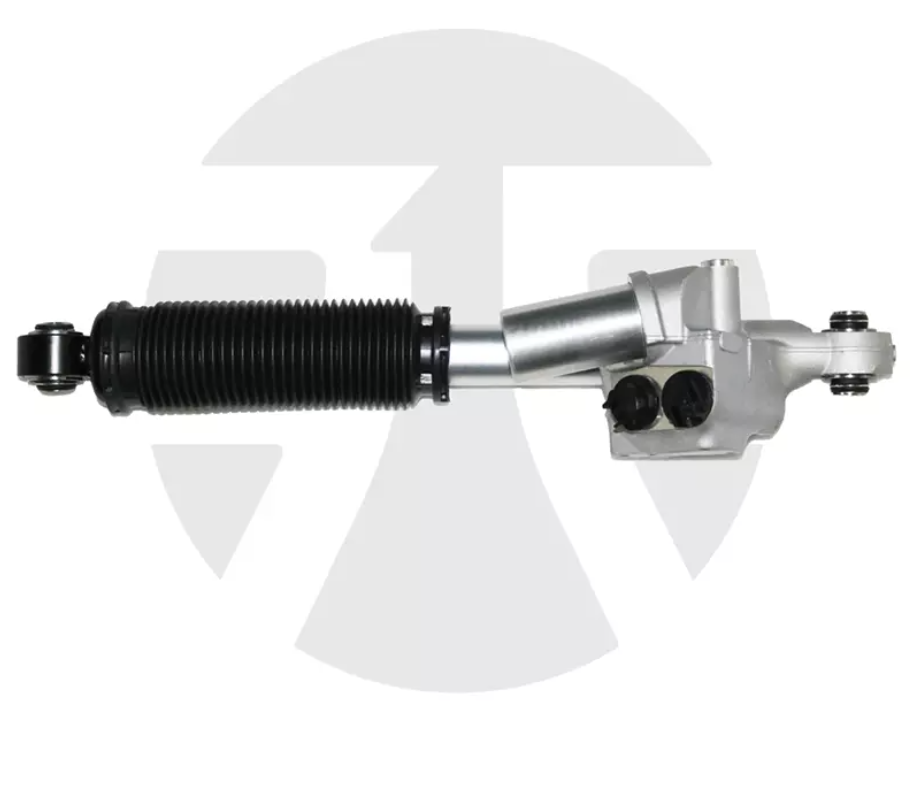
At first glance, a shock absorber looks like a basic tube. However, inside that tube is a world of microscopic tolerances and advanced chemistry. The shock absorber is responsible for converting the kinetic energy of your vehicle's springs into thermal energy, which is then dissipated through hydraulic fluid. To do this consistently, every shock absorber must be built with extreme accuracy.
The goal of the shock absorber manufacturing process is to create a hermetically
sealed unit that can operate under high pressure for years. Any small error during shock absorber manufacturing—a tiny metal burr, an imperfect weld, or a slight variation in oil volume—can lead to a shock absorber that fails prematurely. This is why the process is a blend of heavy-duty metallurgy and clean-room precision.
The journey of every shock absorber begins with raw materials, specifically high-grade steel. The quality of the steel used for the shock absorber body defines its structural integrity.
The first step in shock absorber manufacturing is sourcing seamless steel tubing. For a twin-tube shock absorber, we need two separate cylinders: the inner "working" cylinder and the outer "reserve" cylinder. These tubes are cut to precise lengths using automated high-speed saws. Every shock absorber model has specific length requirements based on the vehicle's suspension travel.
Once cut, the tubes are formed to ensure they are perfectly circular. Even a fraction of a millimeter of "out-of-roundness" in the inner tube of a shock absorber would cause the piston to bind or leak. This stage of shock absorber manufacturing requires constant monitoring of the tube dimensions.
After the tubes are cut, they undergo a rigorous cleaning process. During shock absorber manufacturing, metal shards or "burrs" are created during the cutting process. These must be removed. If a single tiny burr remains inside the shock absorber, it will eventually break off and destroy the internal seals. The tubes are washed in chemical baths and often undergo ultrasonic cleaning to ensure the shock absorber remains internally pristine before it moves to the next stage of shock absorber manufacturing.
If the tube is the house, the piston rod is the backbone of the shock absorber. The rod is the part that moves in and out, carrying the weight of the damping force.
The piston rod starts as a solid steel bar. Through CNC turning, the rod is shaped to include threads at one end and mounts at the other. However, raw steel is too soft for a shock absorber. To increase its durability, the rod undergoes induction hardening. This process uses electricity to heat the surface of the rod to extreme temperatures before it is rapidly cooled. This makes the outer surface of the shock absorber rod incredibly hard while keeping the core flexible enough not to snap under stress.
Once hardened, the rod must be made as smooth as possible. In this part of shock absorber manufacturing, the rod is coated with a layer of hard chrome. This isn't just for looks; the chrome prevents rust and provides a low-friction surface. After plating, the rod is polished to a mirror-like finish. The surface roughness of a high-quality shock absorber rod is typically less than Ra 0.2 micrometers. This smoothness is what allows the shock absorber to move millions of times without wearing out the rubber seals.
The most complex part of shock absorber manufacturing happens inside the unit. The piston and its valve system are what actually do the work of damping.
The piston for a shock absorber is often made using powder metallurgy. Metal powder is pressed into a mold at high pressure and then "sintered" in a furnace. This allows for the creation of intricate passages and orifices within the shock absorber piston that would be impossible to machine traditionally. These passages dictate how the hydraulic oil flows through the shock absorber.
The "secret sauce" of every shock absorber is the valve stack. This consists of several thin, spring-steel discs called shims. These shims are stacked in a specific order on the shock absorber piston. When the shock absorber moves, the oil pushes against these shims. The way they bend determines the damping force of the shock absorber. This stage of shock absorber manufacturing is highly confidential for most brands, as the "shim stack" defines the unique feel of the shock absorber.
This is where all the components of the shock absorber come together in a high-tech assembly line.
The base loop or mounting stud is welded to the outer tube of the shock absorber. In modern shock absorber manufacturing, this is done by robotic welders to ensure 100% consistency. A weak weld here would mean the shock absorber could break off the vehicle, so the structural integrity of these joints is tested rigorously throughout the shock absorber manufacturing process.
Now, the shock absorber is filled with a specialized hydraulic oil. This oil is formulated to resist heat and maintain its thickness. After the oil is added, a gas-charged shock absorber receives a shot of nitrogen gas. The nitrogen is kept under pressure to prevent the oil from foaming during high-speed movement. This "gas-charging" is a critical part of modern shock absorber manufacturing that helps prevent "shock fade" during long drives.
Finally, the top cap and the multi-lip oil seals are installed. The shock absorber is then sealed, often by crimping the top of the tube or using a final 360-degree weld. Once sealed, the shock absorber becomes a closed system. The integrity of this seal is the most important factor in the overall lifespan of the shock absorber.
To ensure the shock absorber survives the harsh environment of the wheel well, it needs a tough exterior.
E-Coating and Painting: The shock absorber is submerged in an electro-static paint bath (E-coating) which ensures every nook and cranny is protected from rust. After this, a final coat of paint is applied to the shock absorber.
Branding and Laser Marking: Every shock absorber is laser-etched with a part number, batch code, and brand name. This allows for full traceability in the shock absorber manufacturing supply chain.
To help you understand the precision involved in shock absorber manufacturing, we have compiled a table showing the critical metrics that are monitored during production.
| Process Step | Critical Metric | Tolerance Standard | Impact on Shock Absorber |
| Rod Grinding | Surface Roughness | Ra < 0.2 μm | Maximizes seal life and reduces friction |
| Tube Welding | Tensile Strength | > 500 MPa | Ensures structural safety under load |
| Oil Filling | Volume Accuracy | ± 0.5% | Ensures consistent damping across all units |
| Gas Charging | Pressure Stability | ± 0.2 Bar | Prevents oil foaming and aeration |
| Piston Fitting | Clearance | 0.01 - 0.03 mm | Prevents internal oil bypass |
| Seal Integrity | Leakage Test | 0% at 10 Bar | Guarantees long-term reliability |
As you can see from this data, shock absorber manufacturing is a game of millimeters and micro-precisions. If any of these metrics are off, the performance of the shock absorber will suffer.
A shock absorber is only as good as its last test. Before a shock absorber leaves the factory, it must pass through a series of "ordeals" to prove it is ready for the road.
The Dyno Test: Every shock absorber is placed on a dynamometer, which moves the shock absorber at different speeds. The machine measures the resistance force in both directions (compression and rebound). This ensures the shock absorber matches its design specifications.
Endurance Testing: A sample of shock absorber units from every batch is placed on a machine that cycles the shock absorber millions of times over several weeks. This simulates years of road use to ensure the shock absorber manufacturing quality is durable.
Salt Spray Testing: To test corrosion resistance, the shock absorber is placed in a chamber and blasted with salt water for hundreds of hours. A high-quality shock absorber should show zero rust after this test.
Extreme Temperature Testing: The shock absorber is frozen to -40°C and then heated to over 100°C to ensure the hydraulic oil and seals can handle any climate.
For those looking at the industrial side of shock absorber manufacturing, here is a comparison of standard vs. high-performance production environments.
| Metric | Standard Shock Absorber Line | High-Performance Shock Absorber Line |
| Automation Level | Semi-Automated | Fully Robotic (Industry 4.0) |
| Cleaning Standard | Solvent Wash | Ultrasonic & Multi-Stage Clean Room |
| Traceability | Batch-Based | Individual Serial Tracking |
| Testing Frequency | 1 in every 100 units | 100% Dynamometer Testing |
| Material Sourcing | Standard Carbon Steel | Aircraft-Grade Alloy / Seamless Steel |
A high-performance shock absorber manufacturing line requires significantly more investment but results in a shock absorber that is far more reliable and consistent.
Even with the most advanced robots, shock absorber manufacturing still requires human expertise. Highly skilled engineers oversee the shock absorber design and calibration. They analyze the data from the testing machines and look for ways to improve the shock absorber manufacturing efficiency.
There is a sense of pride in shock absorber manufacturing. When a technician inspects a finished shock absorber, they aren't just looking at a part; they are looking at the culmination of hours of metallurgical and hydraulic science. This human oversight is the final safety net in the shock absorber manufacturing process.
The world of shock absorber manufacturing is constantly evolving. We are now seeing the integration of "Smart Factory" technologies where sensors on the assembly line can predict if a shock absorber might have an issue before it is even finished.
Furthermore, the materials used in shock absorber manufacturing are becoming lighter and stronger. Aluminum alloys and composite materials are starting to appear in premium shock absorber units. These innovations allow for a shock absorber that reacts faster to road bumps while reducing the overall weight of the vehicle. The future of shock absorber manufacturing is lighter, smarter, and even more precise.
People often ask if all shock absorber units are made the same way. The answer is that while the basic steps are similar, the "quality of the ingredients" and the "precision of the recipe" vary significantly between brands. A budget shock absorber might skip the high-end chrome plating or use a cheaper hydraulic oil, whereas a premium shock absorber will follow every step of the shock absorber manufacturing process to the highest possible standard.
Another question is about the difference between a twin-tube and a monotube shock absorber manufacturing. While the twin-tube shock absorber uses two cylinders, the monotube shock absorber uses a single cylinder with a high-pressure gas chamber separated by a floating piston. The monotube shock absorber manufacturing process is generally more difficult and expensive because the single cylinder must be machined to even higher tolerances.
When you finally install a new shock absorber on your car, you are carrying forward the legacy of the shock absorber manufacturing process. To honor that engineering, you should have your shock absorber inspected regularly. If the seals are kept clean and the mounts are tight, a well-manufactured shock absorber will serve you faithfully for many years.
Understanding how much work goes into shock absorber manufacturing helps you appreciate why you should never cut corners on your suspension. The quality of the shock absorber is the only thing standing between your vehicle and the unpredictable forces of the road.
In conclusion, the shock absorber manufacturing process is an incredible journey of engineering excellence. From the raw steel tubing to the micro-polished piston rod and the calibrated shim stack, every stage is designed with one goal in mind: your safety. A shock absorber isn't just a commodity; it is a life-saving device that requires the highest levels of manufacturing precision.
At Tianyi, we don't just see a shock absorber as a metal part. We see it as a commitment to every driver who trusts our products. We’ve spent years refining our shock absorber manufacturing process because we know that when the road gets rough, your suspension needs to be perfect. We believe in the science of damping and the art of a smooth ride.
Our team at Tianyi takes immense pride in every shock absorber that leaves our facility. We combine the latest robotic technologies with a deep, human-centered focus on quality. We are passionate about innovation in the shock absorber manufacturing world, and we are constantly pushing the boundaries of what a shock absorber can do.
We love sharing the story of how our parts are made because we want you to feel the same confidence in your ride that we feel in our engineering. Whether you're a mechanic looking for a reliable shock absorber or a car owner who wants the best for their family, you can trust that the Tianyi name stands for manufacturing excellence. We're here to make sure every mile you drive is steady, safe, and comfortable. Thank you for joining us on this tour of the shock absorber manufacturing world—we look forward to being a part of your journey on the road.


