
Views: 0 Author: Site Editor Publish Time: 2026-07-23 Origin: Site
Replacing an air suspension component presents an immediate dilemma for vehicle owners: pay the dealership premium for a factory part or risk a third-party alternative. The financial stakes are significant. The wrong choice can compromise your vehicle's handling, trigger persistent dashboard errors, or lead to catastrophic system failure. Balancing factory ride quality, complex electronic damping compatibility, and long-term reliability requires looking beyond the initial purchase.
This guide provides an objective, engineering-focused framework to evaluate your options. By understanding manufacturing tolerances, specific vehicle use cases, and the real-world implications of your choice, you can confidently decide whether an OEM air shock absorber or an aftermarket solution is the right investment for your vehicle. We will break down the mechanical realities of these systems so you can make an informed decision.
An OEM air shock absorber guarantees 1:1 compatibility with factory electronic control units (ECUs), ride height sensors, and active damping systems, eliminating integration guesswork.
The aftermarket is not a monolith; it must be divided into premium performance upgrades (often exceeding OEM specs), budget-tier replacements (which carry higher failure risks), and full coil conversion kits.
Overall financial impact extends beyond the sticker price of the air shock absorber to include installation labor, specialized calibration requirements, and the reliability of the air compressor.
Decision Framework: Default to OEM for preserving luxury ride dynamics and complex sensor integration; select premium aftermarket for heavy-duty applications, towing, or specific performance modifications.
Table of Contents
A properly functioning air suspension system must deliver self-leveling, variable spring rates, and active chassis control. Achieving these outcomes relies on precise engineering and flawless communication with the vehicle's onboard systems. When a vehicle rolls off the assembly line, its suspension is tuned for a very specific set of parameters. Deviating from these parameters changes how the vehicle behaves under load, during cornering, and over rough surfaces.
Active damping systems require exact manufacturing tolerances to function correctly. An OEM air shock absorber is engineered to communicate seamlessly with the vehicle’s onboard diagnostic systems. This integration prevents suspension fault codes and ensures the active chassis control operates as intended. Modern vehicles use a network of sensors to monitor body roll, steering angle, and vehicle speed. The suspension control module processes this data in milliseconds, sending electrical currents to the solenoid valves inside the shock to stiffen or soften the damping.
If the internal valving or the electrical resistance of the solenoid does not perfectly match the factory specifications, the control module will detect a fault. This often results in a dashboard warning light and can force the vehicle into a restricted driving mode. Factory units feature chassis-specific weight tuning. They are custom-calibrated to the vehicle's exact curb weight and distribution. This specialized tuning is particularly important for heavy plug-in hybrids (PHEVs) and electric vehicles (EVs), where improper damping can severely degrade ride quality and handling. The heavy battery packs in these vehicles require specific rebound and compression rates that generic aftermarket parts simply cannot replicate.
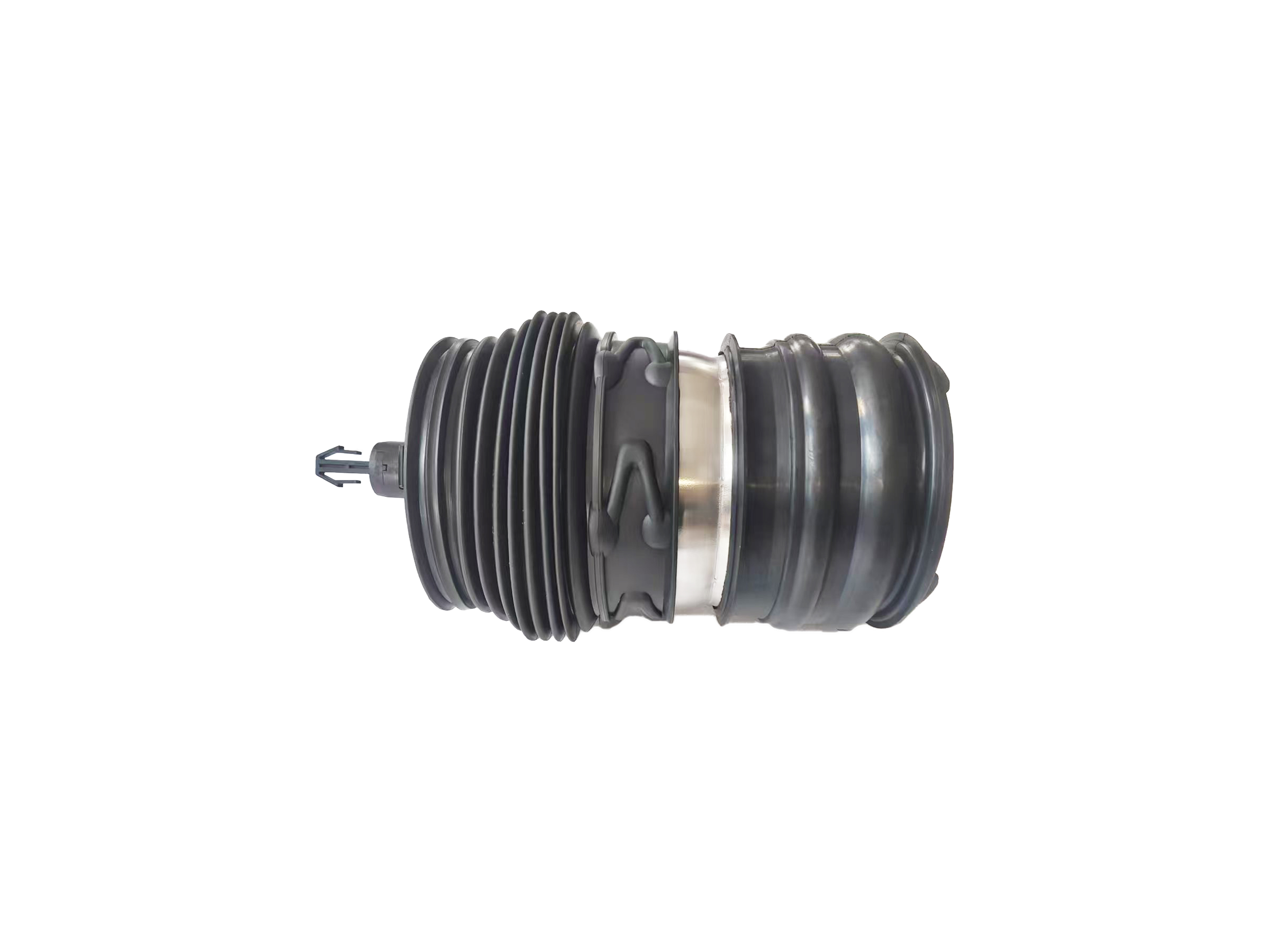
Understanding the difference between "Genuine" and "OES" parts can save buyers significant money without sacrificing quality. A dealership-branded "Genuine" part carries the car manufacturer's logo and a premium price tag. An OES part is manufactured by the exact same company, on the same assembly line, but is sold without the car brand's logo. The physical component, the materials used, and the quality control processes are identical.
Choosing an OES air shock absorber provides OEM-level quality and precise factory specifications at a significantly reduced price point. It represents the smartest baseline replacement for most drivers seeking factory performance. To illustrate the differences, consider the following breakdown of part classifications:
Part Classification | Manufacturer | Branding | Quality Level | Electronic Compatibility |
|---|---|---|---|---|
Genuine OEM | Original Supplier | Vehicle Manufacturer Logo | Exact Factory Spec | 100% Plug-and-Play |
OES (Original Equipment Supplier) | Original Supplier | Supplier Logo (e.g., Bilstein, Continental) | Exact Factory Spec | 100% Plug-and-Play |
Premium Aftermarket | Third-Party Specialist | Aftermarket Brand | Modified / Upgraded Spec | Usually Requires Bypass Modules |
Budget Aftermarket | Various Overseas Factories | Generic or White-Label | Inferior Materials / Generic Valving | High Risk of Error Codes |
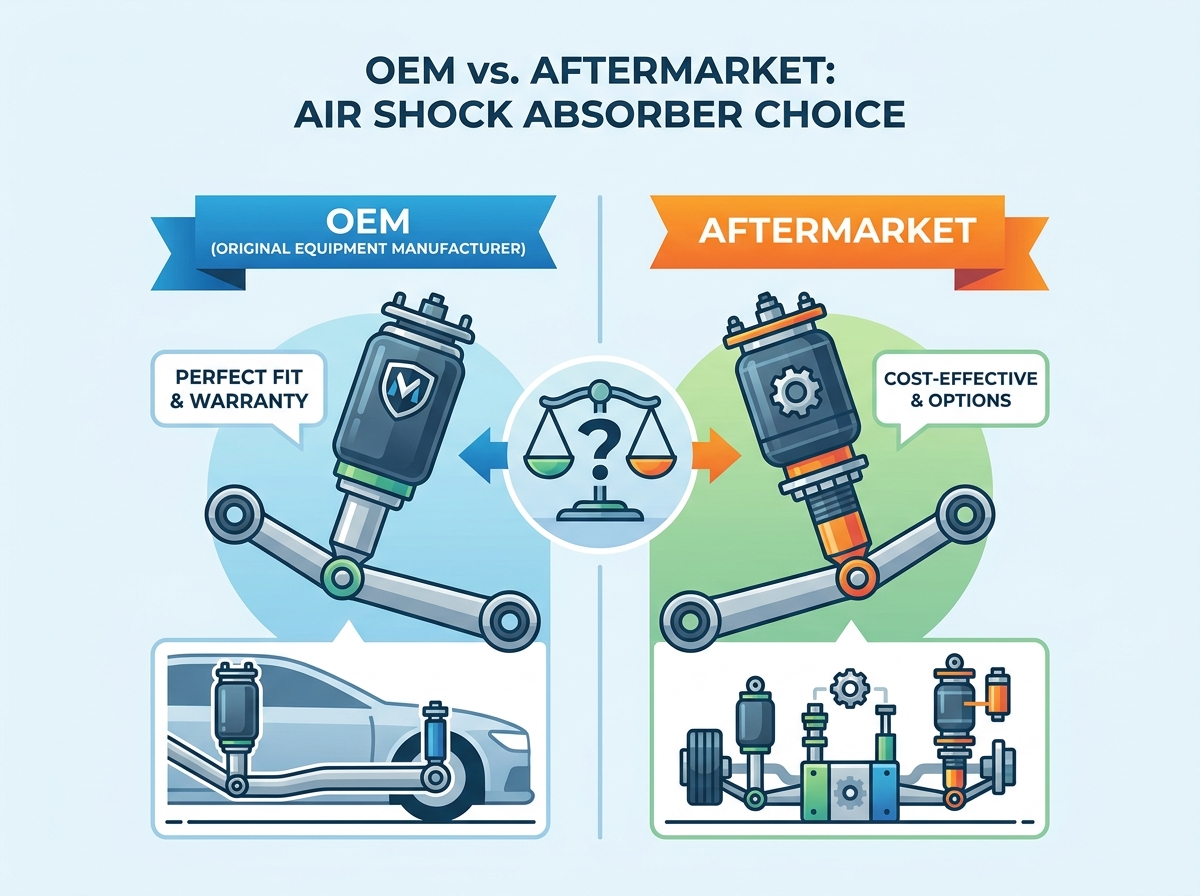
The aftermarket consists of diverse options. Categorizing these solutions prevents false equivalencies and helps buyers match the product to their specific needs. Not all aftermarket parts are created equal, and lumping them into a single category leads to poor purchasing decisions.
Premium aftermarket brands often re-engineer the air shock absorber to address known factory flaws. Upgrades may include replacing standard rubber with aircraft-grade aluminum and utilizing reinforced sleeves. These units are designed for lifted vehicles, heavy towing applications, or track-focused performance. They use thicker rubber compounds for the air bladders and heavy-duty crimping rings to prevent blowouts under extreme loads.
Buyers must consider if a standard road car actually benefits from modified suspension tuning. While premium units offer durability, they can sometimes degrade everyday drivability by introducing a stiffer ride compared to the plush factory calibration. If you use your SUV primarily for commuting and highway driving, a heavy-duty aftermarket shock will likely feel overly harsh over expansion joints and potholes.
Low-cost alternatives often involve significant trade-offs. Budget aftermarket units frequently use inferior rubber compounds and simplified valving. While they may physically fit the vehicle, they merely mimic factory performance rather than matching it. The risk of premature failure and degraded ride quality is substantially higher with these cost-reduction replacements. Mechanics frequently see these budget units fail within a year due to dry rot on the air bladder or internal seal blowouts.
Furthermore, budget units rarely feature active damping capabilities. They often use a passive internal shock absorber and include a cheap electronic resistor to trick the vehicle's computer into thinking the active system is still functioning. This results in a vehicle that cannot adapt to changing road conditions, leading to excessive body roll and increased stopping distances.
Rebuilt OEM cores offer another alternative. When evaluating a remanufactured OEM air shock absorber, you must verify the extent of the rebuild. Buyers must confirm whether the internal shock has been replaced or if only the external air bladder was swapped. A unit with a worn internal shock will perform poorly, regardless of a new air spring.
Many rebuilders simply clean the outside of the old strut, install a new rubber air sleeve, and paint the metal components. The internal hydraulic fluid and valving shims remain untouched. Since the hydraulic portion of the shock degrades over time, installing a "rebuilt" unit with 100,000-mile-old internal valving will result in a bouncy, uncontrolled ride.
Replacing the entire air suspension system with traditional steel coil springs and standard shocks is a growing trend for older vehicles. This alternative path offers long-term reliability benefits by eliminating complex air bladders, valve blocks, and compressors. However, it results in the permanent loss of self-leveling capabilities and adaptive ride-height functions.
When considering a conversion kit, you must factor in the following steps and implications:
Removal of Factory Components: The original air struts, compressor, and valve block must be completely removed or disconnected.
Installation of Coil Springs: Steel springs and passive shock absorbers are bolted into the factory mounting locations.
Electronic Bypass Installation: A specialized electronic module must be wired into the vehicle's CAN bus system to disable the air suspension control module and prevent dashboard warning lights.
Loss of Towing Capability: Without self-leveling air springs, the rear of the vehicle will sag significantly when towing heavy trailers or carrying heavy cargo.

Comparing solutions across technical and experiential metrics clarifies the true value of each option. You must look at how the component performs in real-world conditions, not just how it looks in a catalog.
Valving differences directly impact the driving experience. An OEM air shock absorber maintains the intended plushness of a luxury vehicle. The factory engineers spend thousands of hours tuning the shim stacks inside the shock to absorb high-frequency vibrations while maintaining control over large bumps. In contrast, aftermarket setups, particularly budget units, often feature generic valving that results in a stiffer, less refined ride. They use off-the-shelf internal components that are "close enough" rather than exact matches.
Modern active suspensions rely on complex electronics. Aftermarket units often lack the necessary electronic bypasses or sensor inputs. This deficiency frequently results in persistent dashboard warning lights or forces the vehicle into limp mode, severely restricting performance. The vehicle's computer expects a specific electrical resistance from the damping solenoid. If the aftermarket shock provides a different resistance value, the system flags a hard fault.
The degradation rates of materials vary significantly. OEM synthetic rubber bladders are engineered to withstand road debris, extreme temperatures, and ozone exposure over tens of thousands of miles. They use multi-layer cross-woven cords for structural integrity. Budget aftermarket materials typically degrade faster under the same conditions, leading to early leaks. The rubber becomes brittle in cold weather and overly soft in extreme heat, leading to micro-tears along the folding roll lobe of the air spring.
Replacement options differ in hardware completeness. Buyers must examine whether the new unit includes critical ancillary hardware, such as rear shock mount bushings, dust boots, and bump stops. If these components require separate purchase, the perceived savings of a budget unit quickly diminish. Reusing old, compressed bump stops or cracked upper strut mounts will lead to clunking noises and premature failure of the new air shock.
Evaluating the long-term financial impact requires looking beyond the initial purchase price. A cheap part installed twice is always more expensive than a quality part installed once.
Consider the cost difference between buying one OEM air shock absorber that lasts 80,000 miles versus replacing a budget aftermarket unit twice in the same timeframe. The repeated labor costs, alignment fees, and vehicle downtime often make the cheaper part more expensive in the long run. Every time you open the suspension system, you risk damaging air lines or brass fittings, adding to the overall repair burden.
Warranty terms vary widely across the industry. A typical 12-to-24-month OEM warranty often covers labor if the part is installed by a certified dealer. Conversely, aftermarket lifetime warranties usually cover the part only. If the budget unit fails, the buyer is left paying repeated labor costs for installation. Furthermore, claiming an aftermarket warranty often requires shipping the defective part back to the manufacturer for inspection, leaving your vehicle stranded on a lift for weeks.
Maintaining factory specifications preserves value. For high-end luxury and performance vehicles, prospective buyers expect original equipment. Installing cheap aftermarket suspension components can negatively impact the vehicle's resale value. A knowledgeable buyer or dealership appraiser will spot generic aftermarket air struts and immediately deduct the cost of replacing them with proper OEM components from their offer.

Installing air suspension components involves physical and mechanical realities that must be managed. Even the highest quality part will fail if installed incorrectly.
Improper ride height calibration post-installation is a significant risk. Failing to calibrate the system correctly can lead to uneven tire wear, poor handling, and stress on other suspension components. When a new air strut is installed, the vehicle's computer must be told the new baseline height. If this adaptation procedure is skipped, the vehicle may sit unevenly, causing the compressor to run constantly as it tries to level a poorly calibrated system.
Poor-quality aftermarket seals or improper installation of an OEM air shock absorber can cause micro-leaks. These leaks force the air suspension compressor to overwork continuously. The compressor is designed to run in short bursts to adjust pressure. If it runs continuously to compensate for a leaking O-ring or a porous budget air bladder, the electric motor will overheat and burn out, leading to expensive secondary repairs.
Mitigate risks by following a strict pre-installation checklist. Do not simply bolt the part in and hope for the best. Follow these steps to ensure a successful repair:
Inspect the Air Lines: Check the plastic air lines for deep scratches or kinks that could prevent a proper seal at the brass fitting.
Replace O-Rings: Always use brand new O-rings on the air line fittings. Never reuse old, flattened seals.
Verify Adjacent Components: Check adjacent shock mount bushings, control arm bushings, and sway bar links for wear while the suspension is disassembled.
Perform Software Adaptations: Ensure the mechanic has the specific diagnostic software required for your vehicle make to perform accurate post-installation ride height calibration.
Leak Test: Spray a soapy water solution on all air fittings and the air bladder itself after the system is pressurized to check for micro-leaks before driving the vehicle.
Choosing between an OEM air shock absorber and an aftermarket alternative ultimately depends on your vehicle, performance expectations, and long-term ownership goals. OEM parts remain the best option for maintaining factory ride quality and electronic compatibility, while premium aftermarket solutions can provide excellent value for specific applications when sourced from a trusted manufacturer.
Selecting a reliable suspension supplier is just as important as choosing the right product. Tianyi specializes in manufacturing high-quality air shock absorbers, air springs, compressors, and complete air suspension systems for global OEM and aftermarket customers. With advanced production technology, comprehensive quality testing, and flexible OEM/ODM capabilities, Tianyi delivers dependable air suspension solutions that meet demanding international performance and quality standards.
Match the replacement air shock absorber to your vehicle's suspension system and electronic requirements.
Compare OEM, OES, and premium aftermarket options based on long-term reliability rather than purchase price alone.
Ensure proper installation, leak testing, and suspension calibration after replacement.
Purchase from experienced manufacturers with proven quality control and comprehensive technical support.
Before selecting an air shock absorber supplier, evaluate their manufacturing capabilities, product quality, certification standards, and after-sales service to ensure reliable long-term performance.
A: An OEM air shock absorber typically lasts between 60,000 to 100,000 miles. This lifespan depends heavily on climate, road conditions, and driving habits. Extreme cold makes the rubber bladders brittle, while rough terrain accelerates wear on the internal valving and seals.
A: It frequently does on vehicles equipped with active damping systems. Many aftermarket units lack the necessary electronic bypass modules or exact sensor resistance inputs required to communicate properly with the vehicle's suspension control module, resulting in persistent dashboard errors.
A: You must replace them in pairs across the same axle. Replacing only one side pairs a brand-new, stiff shock with an older, worn shock. This leads to imbalanced damping, unpredictable handling during emergency maneuvers, and uneven tire wear.
A: OES (Original Equipment Supplier) parts are manufactured by the exact same company that produces the OEM parts for the factory assembly line. The only difference is that OES parts lack the vehicle brand's logo, offering identical factory quality without the dealership markup.
A: Yes, air-to-coil conversion kits provide a permanent, mechanical alternative. However, this conversion involves significant trade-offs, including the complete loss of automatic load-leveling capability, a noticeable change in ride quality, and the requirement for electronic bypass modules.
A: Budget aftermarket units often use generic, off-the-shelf valving, which usually results in a harsher, stiffer ride compared to vehicle-specific OEM tuning. Premium aftermarket options can sometimes be manually adjusted for specific stiffness or comfort preferences.


