
Views: 0 Author: Site Editor Publish Time: 2026-07-23 Origin: Site
Luxury vehicles rely on complex, electronically controlled suspension systems to deliver their signature ride quality. When a component fails, passenger comfort and vehicle safety degrade immediately. The dashboard lights up, the chassis sags, and handling becomes unpredictable.
Replacing these components presents a high-stakes choice. You must navigate a fragmented market of OEM, aftermarket, and remanufactured parts without compromising the vehicle’s active damping systems or triggering ECU faults. A poor choice leads to a harsh ride, persistent error codes, or cascading failures across the suspension network.
This guide provides a technical framework for evaluating specifications, material quality, and system compatibility. We will explore how to approach air shock absorber selection to ensure your investment restores factory-level performance, maintains electronic integration, and delivers long-term reliability.
System Integration is Non-Negotiable: Proper selection requires exact matching with the vehicle's factory Electronic Control Units (ECUs) and adaptive damping systems to prevent dashboard errors and handling degradation.
Material Quality Dictates Lifespan: The durability of an air shock absorber relies heavily on the grade of the rubber air sleeve, CNC-machined aluminum components, and heavy-duty crimping rings.
Remanufactured vs. New Trade-offs: While remanufactured units offer cost savings, they often reuse internal shock valving that may be near the end of its lifecycle, making new aftermarket or OEM units a more predictable long-term investment.
Holistic System Health: Replacing a single failing unit without evaluating the opposite side or the air compressor often leads to cascading suspension failures.
Table of Contents
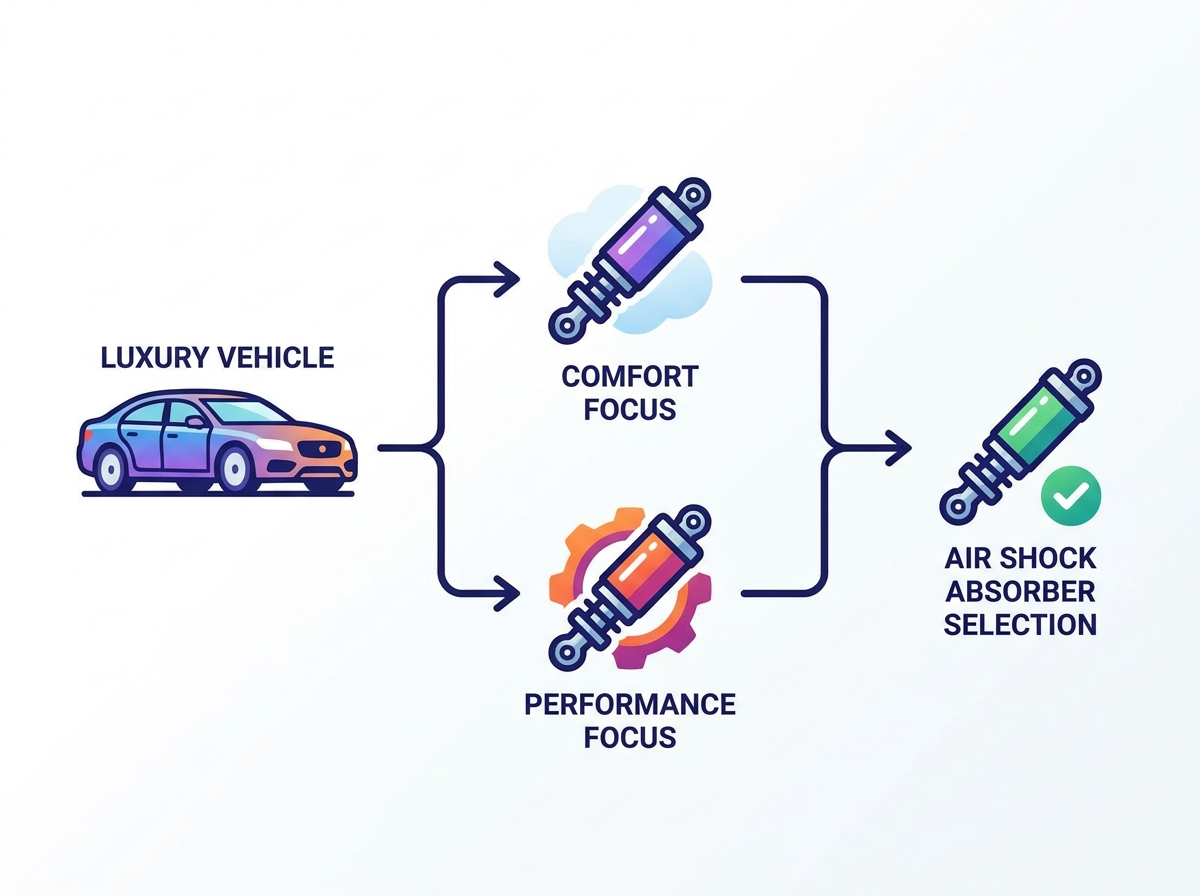
Before purchasing replacement parts, establish the primary goal of the repair. You might want to restore original ride dynamics for a plush executive sedan. Alternatively, you may need to upgrade load capacities for heavy towing in luxury SUVs. Some owners even choose to bypass problematic active systems entirely. Defining this baseline dictates which category of air shock absorber will meet your specific driving requirements. A clear baseline prevents mismatched expectations and ensures the vehicle performs exactly as needed after the repair.
When working on heavy luxury SUVs, the baseline often shifts toward durability under load. These vehicles experience massive dynamic weight transfers during cornering and braking. If the replacement unit lacks the structural rigidity of the factory part, the vehicle will exhibit excessive body roll. Conversely, executive sedans require highly responsive valving to absorb minor road imperfections. Identifying the primary function of the vehicle narrows down the acceptable replacement options immediately.
Modern luxury chassis utilize highly integrated electronics. Identify whether the vehicle uses passive air suspension or active/semi-active damping systems, such as Mercedes-Benz AIRMATIC or Audi Adaptive Air Suspension. Active systems require struts with internal electronic valving that communicates directly with the suspension ECU. Installing a passive shock in an active system without proper bypass modules will trigger immediate dashboard warnings and default the vehicle into a stiff, restricted driving mode.
The communication between the shock and the ECU happens via pulse-width modulation (PWM) signals. The ECU sends rapid electrical pulses to a solenoid valve inside the shock, adjusting the damping force in milliseconds based on steering angle, vehicle speed, and road conditions. If the replacement unit lacks this solenoid or features a mismatched resistance value, the ECU detects an open circuit. This integration is why verifying the exact suspension code on the vehicle's build sheet is a mandatory step before ordering parts.
You must decide between purchasing a pre-assembled, integrated air strut or replacing individual components. A complete assembly includes the damper, air spring, and top mount pre-fitted. This approach saves labor time and guarantees component compatibility. Component-level replacement involves swapping just the air spring bladder or the internal hydraulic shock absorber separately. While parts cost less, the labor required to rebuild the strut safely often negates the initial savings.
Rebuilding a strut on the bench requires specialized spring compressors and extreme caution. The internal seals must seat perfectly, and the crimp rings must be aligned to exact tolerances. A slight misalignment during a component-level rebuild results in a slow leak that will eventually burn out the suspension compressor. For most independent shops and DIY mechanics, the pre-assembled unit provides a much higher success rate and eliminates the variables associated with bench assembly.
Assess the vehicle’s intended use to choose parts rated for specific weight-carrying tolerances. High-payload luxury SUVs with towing requirements need heavy-duty rubber bladders and robust internal valving to handle dynamic weight shifts. Executive sedans prioritizing plushness require valving tuned for rapid, subtle damping adjustments. Matching the load profile ensures the suspension does not bottom out under heavy stress or ride too harshly when unloaded.
Consider the duty cycle of the internal hydraulic fluid. Under heavy loads or aggressive driving, the fluid inside the shock heats up rapidly. High-quality units utilize synthetic hydraulic fluids that resist foaming and viscosity breakdown at high temperatures. If you install a light-duty shock on a heavy SUV, the fluid will overheat, leading to a complete loss of damping force—a condition known as shock fade. Evaluating the load profile prevents this dangerous scenario.

Genuine OEM parts offer guaranteed fitment, exact factory valving, and zero ECU integration issues. They are engineered specifically for your exact chassis code. OEM parts represent the safest choice for newer luxury vehicles where preserving factory warranty and original ride characteristics is paramount. The engineering tolerances on these units are exact, ensuring the ride height sensors and air lines connect without modification.
Using OEM parts also guarantees that the internal bump stops and dust boots meet factory specifications. These secondary components play a massive role in the overall lifespan of the strut. A factory-spec dust boot keeps abrasive road grit away from the main air bladder, preventing premature wear. While the initial investment is higher, the predictability of the repair often justifies the expense for high-value vehicles.
Premium aftermarket brands often reverse-engineer factory parts to identify and improve upon inherent weaknesses. For example, they might upgrade plastic factory pistons to aircraft-grade aluminum. When evaluating aftermarket options, differentiate between units that retain active damping functionality and those that use a bypass resistor. Bypass units trick the ECU into accepting a passive shock, sacrificing dynamic ride control.
The best aftermarket manufacturers utilize CNC-machined components and high-grade neoprene rubber for their air sleeves. They often redesign the crimping rings to provide a stronger seal than the original factory design. This category offers a compelling balance of performance and value, provided you select a brand with a proven track record in the specific vehicle chassis you are repairing.
Remanufactured units provide a middle ground. However, understand the reality of the remanufacturing process. Typically, rebuilders only replace the rubber air bladder, outer seals, and top mounts. The internal hydraulic shock absorber retains its original mileage and internal wear. If the donor core had 80,000 miles, the internal valving is already near the end of its functional lifecycle.
This means that while the unit will hold air and restore the vehicle's ride height, the actual damping performance may be severely degraded. The vehicle might float excessively over highway dips or exhibit poor rebound control. Remanufactured units are best suited for older vehicles where the primary goal is simply keeping the car on the road, rather than restoring showroom-level handling dynamics.
Converting a complex air suspension system to traditional steel coil springs and conventional dampers offers a permanent alternative. These kits eliminate the risk of future air leaks and compressor failures. They provide long-term durability and a maintenance-free nature. The trade-off involves a permanent alteration to ride quality, the loss of load-leveling capabilities, and the removal of active damping adjustments.
A proper conversion kit includes electronic bypass modules to prevent the ECU from throwing suspension fault codes. Without these modules, the vehicle's traction control and ABS systems may function incorrectly, as they rely on data from the suspension network. While conversions are popular for high-mileage vehicles, they fundamentally change how the vehicle drives, often resulting in a stiffer, less refined ride.
The rubber air bladder contains highly pressurized air to support the vehicle's weight. Evaluate the cross-corded rubber compounds used in the construction. High-quality bladders feature multi-ply designs capable of withstanding extreme burst pressures. Inferior rubber degrades rapidly under ozone exposure and road debris, leading to premature leaks and catastrophic blowouts.
The manufacturing process of the rubber sleeve is critical. Premium sleeves use a cross-woven nylon cord embedded within the rubber layers. This cord provides structural integrity, preventing the bladder from ballooning outward under pressure. When inspecting a new unit, the rubber should feel thick and pliable, not stiff or plasticky. The crimp rings securing the bladder to the shock body must be heavy-duty steel, compressed with specialized hydraulic machinery to ensure a permanent, leak-proof seal.
Internal shock valving dictates how the vehicle absorbs impacts and controls body roll. Verify that the valving matches the specific weight distribution and handling characteristics of your exact vehicle trim. A V8 model requires different damping rates than a V6 model of the same chassis. Incorrect valving results in a bouncy ride, excessive nose dive under braking, or harsh impacts over expansion joints.
The valving consists of a series of shims and fluid ports inside the shock body. As the suspension compresses and rebounds, hydraulic fluid is forced through these ports. The thickness and arrangement of the shims determine the resistance. High-end replacement units replicate the factory shim stack precisely, ensuring the vehicle maintains its intended balance between comfort and control. Cheaper units often use generic valving profiles, resulting in a compromised driving experience.
Precise physical measurements prevent suspension binding and installation failures. Verify compressed length, extended length, and total stroke. Check the ride-height sensor mounting bracket configurations. Even minor dimensional deviations can alter suspension geometry, causing uneven tire wear or preventing the vehicle from achieving its calibrated ride height.
During installation, the strut must align perfectly with the lower control arm and the upper strut tower. If the mounting holes are off by even a few millimeters, the technician will have to force the component into place, pre-loading the suspension bushings and causing premature wear. Furthermore, the orientation of the air line fitting must match the factory routing to prevent the plastic air line from kinking or rubbing against moving suspension parts.
Assess the quality of the brass fittings, O-rings, and ride-height sensor mounting points. High-quality fittings ensure a leak-free, plug-and-play installation. Cheap plastic fittings or poorly machined threads strip easily and leak air immediately. The integrity of these connections dictates whether the system holds pressure overnight or forces the compressor to run continuously.
The Voss fittings used on most European air suspension systems require precise machining. The brass compression ring must bite into the plastic air line evenly. If the threads on the strut body are rough or shallow, the fitting will not seat correctly. Always inspect the threads before installation and ensure the supplied O-rings are made of high-quality Viton or similar durable materials that resist degradation from temperature fluctuations and road chemicals.

Suspension components endure constant exposure to water, salt, and road grime. Check for anodized or powder-coated finishes on all metal components. Bare steel rusts quickly, compromising structural integrity and making future removal nearly impossible. Corrosion resistance is a critical evaluation dimension, especially for vehicles operated in harsh winter climates.
The lower mounting fork or eyelet is particularly susceptible to galvanic corrosion, especially where steel bolts pass through aluminum control arms. Premium replacement units utilize heavy zinc plating or thick powder coating to create a barrier against the elements. The top mount assembly should also feature a protective finish, as water often pools in the strut tower area, leading to hidden rust that can eventually cause the strut to punch through the hood.
Replacement Type | Electronic Integration | Ride Quality | Durability Focus |
|---|---|---|---|
Genuine OEM | Flawless / Plug-and-Play | Factory Original | Standard Factory Specs |
Premium Aftermarket (Active) | Full Integration | Matches or Exceeds OEM | Upgraded Materials (e.g., Aluminum) |
Aftermarket (Passive with Bypass) | Bypassed (No Errors) | Static / Fixed Damping | Reliable but Basic |
Remanufactured | Varies by Rebuilder | Dependent on Core Wear | New Bladder, Old Hydraulics |
Coil Conversion | Bypass Module Required | Conventional / Stiffer | Permanent / Maintenance-Free |
Installing passive aftermarket shocks with electronic bypass modules saves significant money upfront. However, you must weigh these financial savings against the loss of dynamic handling and adaptive ride control. Luxury vehicles rely on active damping to stiffen the outside wheels during cornering and soften the ride over rough pavement. Bypassing this system degrades the vehicle's fundamental engineering intent.
The bypass module is simply a resistor that mimics the electrical load of the factory solenoid valve. It tricks the ECU into thinking the active shock is still present and functioning. While this keeps the dashboard clear of warning lights, the vehicle loses its ability to react to emergency maneuvers. In a sudden lane-change scenario, the passive shocks cannot stiffen to control body roll, potentially compromising the vehicle's stability and increasing stopping distances.
Replacing one failed unit seems cost-effective, but it introduces mechanical imbalances. The new shock operates with full damping force, while the older shock on the opposite side exhibits reduced resistance. This imbalance causes uneven handling and accelerates wear on the older unit. Replacing them in axle pairs maintains balanced handling and prevents the older shock from failing shortly after the initial repair.
When a vehicle corners, the suspension relies on equal resistance from both sides of the axle to maintain a flat, predictable trajectory. A new strut paired with a worn strut creates a diagonal weight transfer issue. The vehicle will dive sharply on the side with the worn strut, triggering the stability control system prematurely. Axle-pair replacement is a standard industry best practice for a reason: it ensures the vehicle behaves predictably under all driving conditions.
Analyze manufacturer warranties as an indicator of component confidence and long-term value. A limited lifetime warranty suggests the manufacturer uses premium materials and robust assembly techniques. Conversely, a standard 1-year warranty often indicates cheaper construction. Factor the warranty length into your selection process to protect against premature failures and repeat labor costs.
Read the fine print of any warranty carefully. Some warranties only cover the rubber air bladder and exclude the internal hydraulic damper. Others require proof of professional installation and a simultaneous air compressor replacement to remain valid. A comprehensive warranty from a reputable manufacturer provides peace of mind and protects your investment against manufacturing defects that might not become apparent until months after the installation.
Installing new suspension components requires specialized diagnostic tools like VCDS or STAR diagnostic systems. You must depressurize the system safely before removal. Post-installation, the vehicle requires recalibration of the ride height sensors. Failing to perform this adaptation leaves the vehicle sitting unevenly and triggers persistent suspension fault codes.
Connect the diagnostic scan tool to the vehicle's OBD-II port.
Navigate to the suspension control module and select the depressurize function.
Physically replace the suspension components following factory torque specifications.
Use the scan tool to initiate the system refill process, ensuring the compressor does not overheat.
Perform the ride height calibration routine, measuring each wheel arch and inputting the data into the scan tool.
Skipping the calibration step is a common error. The ECU relies on precise voltage readings from the ride height sensors to determine the vehicle's level. If the new strut sits slightly higher or lower than the old one, the ECU will constantly adjust the air pressure, overworking the compressor and creating a harsh ride. Proper calibration establishes a new baseline for the system.
A leaking shock forces the suspension air compressor to run constantly, generating excessive heat. Mitigate the risk of burning out the compressor by pressure-testing the system immediately after installing the new unit. Verify that the compressor shuts off once the vehicle reaches its target ride height. If the compressor sounds loud or struggles to lift the car, it likely sustained damage from the previous leak.
The air compressor is the heart of the suspension system. It is designed for intermittent duty cycles, not continuous operation. When a strut leaks, the compressor runs beyond its thermal limits, melting the internal piston ring and scoring the cylinder wall. Always replace the compressor relay when installing a new strut, as the old relay contacts often fuse together from the excessive current draw caused by a failing compressor.
Ensure that the chosen aftermarket component and the installation method comply with any existing extended vehicle warranties. Some warranty administrators deny claims if non-approved aftermarket parts or bypass modules are installed. Consult your warranty documentation before modifying active damping systems to avoid voiding coverage on related electronic modules.
Warranty inspectors look for any modifications that alter the vehicle's factory specifications. Splicing wires to install a bypass resistor or modifying the air lines to fit a non-standard fitting gives the administrator grounds to deny a claim. Sticking to direct-fit, plug-and-play components minimizes this risk and ensures the repair remains invisible to warranty inspectors.
Successful part selection hinges on prioritizing electronic compatibility and premium bladder construction over upfront cost savings. For vehicles under 7 years old, prioritize OEM or premium active-damping aftermarket units to preserve factory performance. For older vehicles where value is a primary concern, high-quality passive conversions or reputable remanufactured units provide viable solutions. Take these immediate steps to ensure a successful repair:
Verify your vehicle's exact VIN and suspension code to guarantee fitment.
Inspect the air compressor and valve block for signs of wear or overheating.
Consult with a specialized European or luxury vehicle technician before finalizing your purchase.
Plan to replace components in axle pairs to maintain balanced handling.
A: The average lifespan ranges from 80,000 to 100,000 miles, or roughly 8 to 10 years. Environmental factors heavily influence longevity. Extreme cold causes rubber bladders to become brittle, while dry rot and road salt accelerate material degradation, leading to premature leaks.
A: While technically possible, mechanics strongly advise replacing them in pairs per axle. A new unit has stiffer damping and full pressure capacity, while the older unit is worn. This imbalance causes unpredictable handling and forces the older unit to work harder, usually leading to its failure shortly after.
A: An air spring is simply the rubber bladder that holds pressurized air to support the vehicle's weight. An air shock absorber, often called an air strut, integrates both the air bladder for load support and the internal hydraulic damper for ride control into one complete assembly.
A: High-quality direct replacements or passive units equipped with proper electronic bypass resistors will not trigger faults. However, cheap, incompatible units that fail to communicate with the suspension ECU will cause persistent dashboard errors and may lock the vehicle in a restricted driving mode.
A: Primary symptoms include the vehicle sagging overnight, the air compressor running constantly to maintain pressure, a noticeably harsher ride, or visible hydraulic oil leaking from the shock body beneath the air bladder.
A: Park the vehicle on flat, level ground. Measure vertically from the center of the wheel hub directly up to the bottom edge of the fender arch. Compare this measurement against the factory ride-height calibration baselines specified in your service manual.
A: Yes, air-to-coil conversion kits are widely available. They eliminate future air leaks and compressor failures, offering financial benefits. However, you permanently lose active damping adjustments, load-leveling capabilities, and the signature plush ride quality, which may impact vehicle resale value.


