
Views: 0 Author: Site Editor Publish Time: 2026-01-18 Origin: Site
Have you ever wondered why some cars feel like they are floating on a cloud while others make you feel every pebble on the pavement? Or why your vehicle suddenly feels nervous and unpredictable when you try to brake at a high speed? Most of the time, the answer lies in a component that works silently in the shadows of your wheel wells. I have spent years observing how a single shock absorber can change the entire personality of a vehicle. It is the bridge between the raw mechanical power of your engine and the delicate comfort of your cabin. In this guide, we are going to explore how a shock absorber dictates your driving experience. We will look at the shock absorber function in detail and analyze why a high-quality shock absorber is your best insurance policy on the road.
Whether you are a daily commuter trying to make your morning drive more pleasant or a safety-conscious parent looking to protect your family, understanding the shock absorber is essential. A shock absorber is not just a luxury; it is a critical safety device. We are going to dive into the physics of damping, the reality of road traction, and the technical reasons why your shock absorber might be the most important part of your suspension.
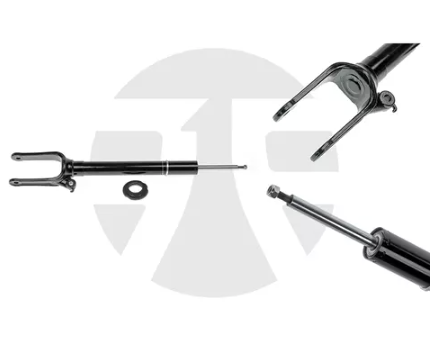
When most people think about a shock absorber, they think about comfort. They imagine a shock absorber soaking up a pothole or a shock absorber smoothing out a gravel road. While that is a large part of the story, it is only half of it. The psychological and physical impact of a vehicle's ride quality is immense. A car that bounces uncontrollably or vibrates constantly causes driver fatigue, which directly leads to slower reaction times. This is where the shock absorber function becomes a safety feature.
A shock absorber is the primary link between passenger comfort and mechanical stability. If a shock absorber is working correctly, you barely notice the road surface. If a shock absorber is failing, every bump becomes a challenge for the driver to maintain control. We often see drivers focusing on their tires or their brakes, but the shock absorber is what allows those tires and brakes to do their jobs. Without the damping force of a shock absorber, the rest of your safety systems are essentially guessing.
Passenger comfort is about more than just a "soft" seat. It is about how the car manages vibrations and body movements. The shock absorber function here is to act as a filter. Every time your wheel hits an irregularity, the energy travels up through the suspension. Without a shock absorber, that energy would hit the chassis and your body with full force.
A high-quality shock absorber filters out high-frequency road noise and vibrations. Imagine driving over a section of "washboard" dirt road. A worn shock absorber would let the car chatter and shake, making it difficult to even hold the steering wheel. A fresh shock absorber, however, uses its internal valving to damp those vibrations before they reach the cabin. This creates what we often call the "magic carpet" feel.
Furthermore, the shock absorber is responsible for preventing the "seasick" feeling. This occurs when a car sways excessively from side to side or bounces repeatedly after a bump. By controlling the extension and compression of the springs, the shock absorber keeps the car level and stable. This is especially important for passengers in the back seat who are more susceptible to motion sickness caused by a faulty shock absorber.
We often overlook the rear shock absorber, but it is critical for comfort when the car is full. When you pack your car for a family trip, the added weight of luggage and passengers puts a massive strain on the rear suspension. A weak rear shock absorber will allow the car to "bottom out," which is when the suspension hits its physical limits. This sends a violent jolt through the car.
A heavy-duty shock absorber manages that weight, ensuring that even with a full load, the ride remains smooth. The shock absorber function in this scenario is to provide enough resistance to prevent sagging and instability. When you have a reliable shock absorber in the rear, the car feels planted and secure, regardless of how much gear you are hauling.
If comfort is the "luxury" side of the shock absorber, safety is the "critical" side. The primary shock absorber function is to maintain constant contact between your tires and the road. This might sound simple, but the physics are quite complex.
Think about a tire as it hits a bump at highway speed. Without a shock absorber, the tire would bounce up into the air. For a split second, that tire is not touching the road. If you try to steer or brake while that tire is in the air, nothing happens. The shock absorber forces the tire back down onto the pavement as quickly as possible.
This is why a bouncing wheel—caused by a failing shock absorber—is so dangerous. It significantly reduces your traction. In rainy or snowy conditions, a weak shock absorber can lead to hydroplaning because the tire isn't pressing down firmly enough to clear the water. The relationship between the shock absorber and the vehicle's electronic stability control (ESC) is also vital. The ESC system relies on the shock absorber to keep the wheels steady so it can accurately apply the brakes to prevent a skid.
One of the most startling facts about the shock absorber is how much it affects your stopping distance. When you slam on the brakes, the weight of the vehicle shifts forward. This is called "nose-dive." A good shock absorber resists this movement, keeping the car level. If your shock absorber is worn, the front of the car dives down, which takes weight off the rear wheels.
This loss of weight on the rear wheels means your rear brakes become much less effective. Data shows that a car with a 50% worn shock absorber can have a braking distance that is up to several meters longer at 60 mph. In an emergency situation, those few meters are the difference between stopping safely and having a collision. Fresh shock absorber units are also essential for the efficiency of the anti-lock braking system (ABS). If the wheel is bouncing, the ABS sensor gets confused and cannot modulate the braking pressure correctly.
Because a shock absorber wears out slowly over tens of thousands of miles, many drivers don't notice the gradual decline in performance. However, there are specific "red flags" that every driver should know. If you ignore these shock absorber symptoms, you are taking an unnecessary risk with your safety.
The most obvious sign is the "bounce test." If you push down on the corner of your car and it bounces more than once or twice, your shock absorber is likely finished. You should also look for fluid leaks. A shock absorber is filled with hydraulic oil, and if you see that oil leaking down the side of the shock absorber body, the internal seals have failed.
Another sign is "cupped" tires. This is a wavy wear pattern on your tire tread that happens because the wheel is literally bouncing down the road. This is a definitive sign that the shock absorber function has been lost. If you see this on your tires, you need to replace your shock absorber immediately, or you will ruin your new tires in a matter of months.
Beyond the physical signs, there are the handling risks. If your car feels "floaty" at high speeds or if it sways excessively when you change lanes, your shock absorber is no longer providing the necessary stability. This creates a high level of stress for the driver. You find yourself constantly correcting the steering to keep the car in its lane. This psychological toll is often underestimated, but a fresh shock absorber can make you feel much more confident and relaxed behind the wheel.
To help clarify the differences in vehicle behavior, I have put together a comparison table. This data shows how a healthy shock absorber performs against a failing one across various safety and comfort benchmarks.
| Driving Condition | Healthy Shock Absorber | Failing Shock Absorber | Safety / Comfort Risk |
| Emergency Braking | Level chassis, rapid stop | Significant nose-dive | Increased stopping distance |
| Sharp Cornering | Minimal body roll, high grip | Excessive swaying and lean | Potential loss of control |
| Rough Pavements | Smooth, controlled damping | Repetitive bouncing | Loss of tire traction |
| Heavy Payloads | Stable ride height | Sagging and instability | Structural strain on suspension |
| Highway Speeds | Firm and centered steering | "Floaty" or nervous feel | High driver fatigue |
| Wet Road Braking | Consistent tire pressure | Prone to hydroplaning | High risk of skidding |
If you are inspecting your car or talking to a mechanic, these are the standards we look for in a professional shock absorber evaluation.
| Evaluation Metric | Ideal Shock Absorber Standard | Failure Threshold |
| Bounce Recovery | 1 to 1.5 cycles | 3 or more cycles |
| Surface Inspection | Bone dry, clean body | Visible oil film or dripping |
| Internal Valving | Consistent resistance | "Dead zones" in travel |
| Bushings and Mounts | Intact and supple | Cracked, dry-rotted, or missing |
| Piston Rod Condition | Smooth and shiny | Pitted, rusted, or scored |
| Tire Tread Pattern | Even across the width | Cupped or scalloped edges |
Not all shock absorber units are created equal. The lifespan and performance of a shock absorber depend entirely on the quality of the materials used in its construction. During the manufacturing process, a high-quality shock absorber uses high-grade steel for the outer casing and precision-ground rods for the internal piston.
The hydraulic fluid inside a shock absorber is also a high-tech material. It must maintain its viscosity across a wide range of temperatures. If you drive in the freezing winter, the fluid in your shock absorber shouldn't become too thick. If you are driving on a hot summer day, the fluid in your shock absorber shouldn't become too thin. This consistency is what allows for a predictable shock absorber function.
Precision valving is another critical factor. Every shock absorber has a series of "shims" or small metal discs that regulate the flow of oil. High-end shock absorber manufacturing involves tuning these shims to a fraction of a millimeter. This is how engineers create a specific ride profile—whether it is "sporty" or "comfortable." Laboratory testing ensures that every shock absorber can withstand millions of cycles without losing its damping force.
The shock absorber doesn't work in a vacuum. It is part of a complex system that includes springs, bushings, control arms, and tires. However, the shock absorber is the only part of this system that is truly "active" in managing energy. The spring stores the energy, but the shock absorber dissipates it.
In modern cars, we are seeing more electronic shock absorber designs. These units use magnetic fluid or electronic valves to change the shock absorber function in real-time. This allows the car to be soft and comfortable on the highway but instantly become stiff and responsive when you enter a sharp corner. While these systems are more complex, they rely on the same fundamental principles as a standard hydraulic shock absorber.
I often hear drivers complain about the cost of a new shock absorber. However, I always remind them that a faulty shock absorber is much more expensive in the long run. When a shock absorber fails, it places a massive amount of extra stress on the rest of your suspension.
Your ball joints, control arm bushings, and tires will all wear out much faster if your shock absorber is not doing its job. By replacing your shock absorber at the recommended 50,000-mile interval, you are actually extending the life of your entire vehicle. Think of a new shock absorber as an investment in your car's longevity. It is far cheaper to buy a pair of shock absorber units than it is to replace a full set of tires and a steering rack.
If you have decided it is time for a new shock absorber, you need to think about how you use your vehicle. There is no such thing as a "perfect" shock absorber for everyone.
For the Daily Commuter: Look for a shock absorber that prioritizes "comfort" and "vibration damping." These units are tuned to soak up the small imperfections of city streets.
For the Enthusiast: You might want a shock absorber that is "stiffer." This will give you more feedback through the steering wheel and reduce body roll in the corners, though the ride may be a bit firmer.
For the Heavy Hauler: If you frequently tow a trailer or carry heavy loads, you need a heavy-duty shock absorber. Some of these shock absorber designs even have an internal "helper spring" to help manage the weight.
For the Off-Roader: You need a shock absorber with a large diameter to help dissipate the heat generated by constant rough terrain.
As we move toward a more sustainable future, the manufacturing and recycling of the shock absorber have become important topics. Most of a shock absorber is made of steel, which is highly recyclable. However, the hydraulic oil inside a shock absorber must be handled carefully.
When you replace your shock absorber, make sure the old units are taken to a proper recycling facility. Many modern shock absorber manufacturers are also moving toward more environmentally friendly fluids and coating processes. This ensures that the shock absorber you buy today has a lower environmental impact than the ones produced twenty years ago.
I always recommend that drivers have their shock absorber inspected every 12,000 miles, which is usually every other oil change. A professional can put your car on a lift and look for the subtle signs of shock absorber wear that you might miss.
One of the most important rules is that you must replace your shock absorber in pairs. Never just replace one shock absorber. If the left front shock absorber is worn, the right front shock absorber is likely in similar condition. Having a new shock absorber on one side and an old shock absorber on the other will make the car handle unpredictably and can be quite dangerous. Maintaining balance on the same axle is a non-negotiable rule for suspension safety.
There are a few myths about the shock absorber that I would like to clear up. First, a shock absorber does not "lift" your car. If your car is sagging, that is usually a problem with the springs, not the shock absorber. The shock absorber controls movement, but the spring supports the height.
Second, a "stiff" shock absorber is not always better for safety. If a shock absorber is too stiff for the road conditions, the car will skip over bumps rather than soaking them up, which actually reduces traction. The best shock absorber is the one that is tuned specifically for your vehicle's weight and intended use.
We are entering an exciting era for the shock absorber. Engineers are working on "regenerative" shock absorber designs that can actually capture the energy from road bumps and turn it into electricity to help power the car's electronics. This would mean that every pothole you hit could technically help charge your battery.
We are also seeing the integration of AI with shock absorber systems. In the future, your car will use cameras to "see" the road ahead and tell each individual shock absorber exactly how to react before the wheel even hits the bump. This level of precision will take the shock absorber function to a level of comfort and safety that we can only dream of today.
In summary, the shock absorber is the silent guardian of your vehicle. It manages the energy of the road, keeps your tires in contact with the pavement, and ensures that you and your family are comfortable and safe. From the shock absorber function of managing "nose-dive" during braking to its ability to filter out the harshness of a rough road, the shock absorber is working every second you are behind the wheel.
I have seen many cars transformed by the simple act of installing a high-quality shock absorber. It is the single best way to restore that "new car feel" and ensure that your vehicle handles as safely as possible. Don't wait until your car is bouncing down the road to think about your suspension. A proactive approach to your shock absorber will save you money, protect your tires, and give you peace of mind.
At the end of the day, a vehicle is only as good as the components that connect it to the road. I truly believe that the quality of your shock absorber defines your relationship with your car. When you can trust your suspension to react predictably in an emergency, driving becomes much less stressful. That is why the technical details of the shock absorber matter so much.
At Tianyi, we take this responsibility seriously. We don't just see the shock absorber as a piece of hardware; we see it as a promise of safety. Every shock absorber we produce is a result of our passion for precision engineering and our commitment to the modern driver. We understand the science behind the shock absorber function, and we strive to provide products that exceed the highest standards of the industry.
I’ve often said that the best part of our job is knowing that someone is driving home tonight on a set of our shock absorber units, feeling a little more comfortable and a lot more secure. We are not just about manufacturing parts; we are about the people who rely on them every single day. If you ever find yourself wondering about the health of your suspension or if you need advice on the right shock absorber for your needs, we are always here to help. Your ride comfort and safety are the reasons we do what we do at Tianyi, and we look forward to keeping you steady on the road for many miles to come.


