
Views: 0 Author: Site Editor Publish Time: 2026-09-15 Origin: Site
Pneumatic chassis setups offer unmatched ride quality, dynamic load leveling, and adjustable aesthetics that traditional steel springs simply cannot replicate. Yet, they carry a persistent industry reputation for unpredictable failures. Buyers evaluating aftermarket kits or purchasing used vehicles with factory setups struggle to calculate long-term maintenance needs due to vague lifetime claims and highly variable wear rates.
If you want to know exactly how long does air suspension last, you have to look past generalized mileage estimates. A pneumatic chassis setup is an interconnected network of mechanical, electrical, and pneumatic components. We need to break down the system part by part. We will examine the environmental factors that degrade these components and the maintenance protocols required to protect your air suspension investment. This guide provides a realistic look at what fails, why it fails, and how you can keep your vehicle level for years to come.
Expect a baseline lifespan of 6 to 10 years (or 50,000 to 100,000 miles) for primary components like air springs and struts under normal driving conditions.
Air suspension is a complex system, not a single part; while tanks can last a lifetime, compressors and valve manifolds typically require replacement every 3 to 5 years.
The #1 Failure Catalyst: Undetected micro-leaks in air lines or bags force the compressor to overwork, leading to premature burnout—making leak detection the most critical maintenance task.
Electronic Vulnerabilities: Beyond pneumatic parts, air management systems (ECUs and height sensors) are highly susceptible to road debris and wiring corrosion.
Climate Impact: Extreme temperatures (both hot and cold) and road salt significantly reduce the lifespan of rubber bladders and plastic fittings compared to mild, dry climates.
Table of Contents
Industry standard evaluations place the average lifespan of primary pneumatic suspension components between 50,000 and 100,000 miles. This wide gap exists because mileage only tells half the story. In heavy-use scenarios or harsh winter climates, conservative estimates drop to the 50,000 to 70,000-mile mark. Under ideal conditions in mild, dry climates, systems frequently push past 100,000 miles or reach 6 to 10 years of service. Age kills these systems before friction does. Rubber components suffer from dry rot and ozone degradation over time. A garage-kept vehicle driven rarely might still experience bladder failure at the exact same age as a daily driver.
Lifespan expectations shift dramatically depending on the origin of the system. Factory-installed OEM setups found on luxury SUVs and sedans prioritize long-term comfort and isolation. Automakers route lines through protected chassis channels and shield components from direct road spray. Conversely, aftermarket setups installed for stance, style, and track performance prioritize extreme adjustability. While high-end aftermarket brands use excellent materials, custom installations introduce variables that shorten the overall lifespan if the installer cuts corners.
Understanding system longevity requires adopting the weakest link principle. A pneumatic network only lasts as long as its ability to hold air and manage pressure. A heavy-duty, military-grade air tank provides zero value if a tiny plastic fitting develops a micro-leak. When one small component fails to retain pressure, it forces the rest of the system to compensate. This rapidly accelerates wear on the most expensive mechanical parts.
Component | Average Lifespan | Primary Wear Factor |
|---|---|---|
Air Springs / Bags | 50,000 - 100,000 Miles | Dry rot, folding friction, road debris |
Air Compressor | 3 - 5 Years | Thermal overload from system leaks |
Valve Manifold | 3 - 5 Years | Internal moisture, freezing, debris |
Air Lines | 5 - 10 Years | Chafing, improper routing, heat exposure |
Air Tank | Life of Vehicle | Internal rust (steel tanks only) |
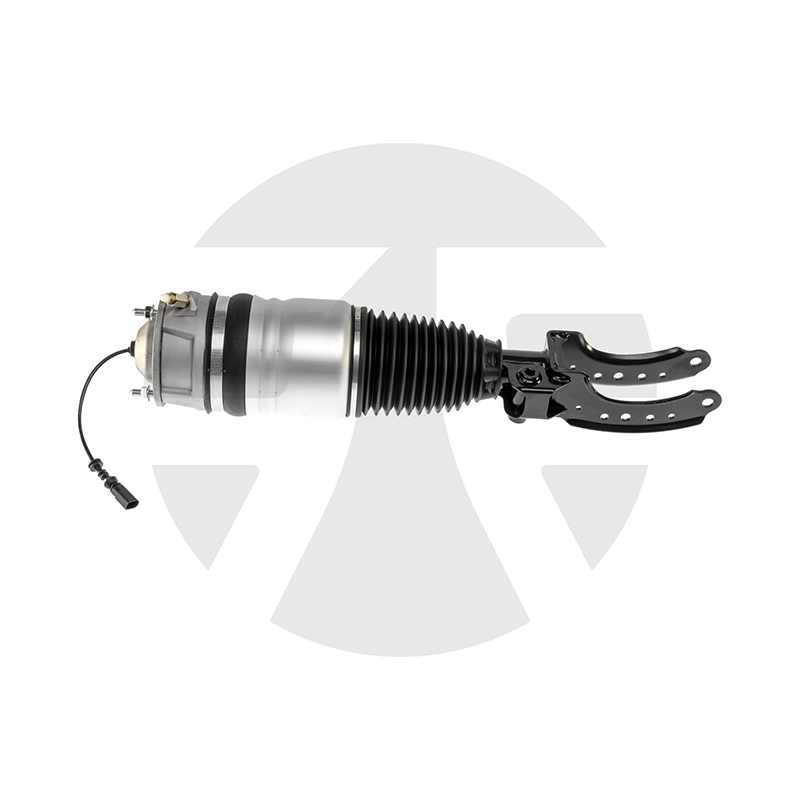
The air springs carry the physical weight of the vehicle and endure constant dynamic stress. Manufacturers construct these bladders from cross-linked rubber or heavy-duty polyurethane. They flex and fold over a lower piston millions of times over their lifespan. Physical degradation is inevitable. The constant rolling action creates stress lines in the rubber. Road grit gets trapped between the bag and the piston, acting like sandpaper during every bump. Exposure to ozone causes the material to lose its elasticity. Dry rot eventually sets in, creating microscopic cracks in the rubber that expand under load and rupture.
Compressors serve as the workhorses of the system, operating under strict duty cycle limits. A duty cycle dictates how long a compressor can run before it needs to cool down to prevent thermal overload. A 33% duty cycle compressor needs twice as much time to cool down as it spends running. Compressors rarely die of old age. They die from overworking. When a system develops a leak, the compressor runs constantly to maintain ride height. This continuous operation pushes the motor past its thermal threshold, melting internal seals, wearing out the piston ring, and burning out the motor long before its expected lifespan.
The valve manifold directs airflow to individual corners of the vehicle using a series of electronic solenoids and internal O-rings. These aluminum blocks are highly sensitive to contamination. Internal debris from degrading air lines, ingested dust, or accumulated moisture causes the internal plungers to stick open or closed. In freezing temperatures, trapped moisture turns to ice. This physically blocks the solenoids and tears the O-rings upon activation. Expect a reliable service life of 3 to 5 years before internal seals begin to bypass air and cause cross-leakage between corners.
The electronic brain of the suspension includes the ECU, wiring harnesses, and physical height sensors mounted to the control arms. Solid-state electronics should last the life of the vehicle. In practice, their lifespan depends entirely on their environment. Height sensor linkages sit exposed to direct road spray, rocks, and physical impacts. The small ball joints seize up if not lubricated. Wiring harnesses subjected to road salt suffer from galvanic corrosion. This leads to erratic voltage signals that cause the ECU to miscalculate ride height, even if the pneumatic components hold pressure perfectly.
Air reservoirs stand as the most durable components in the system. Seamless aluminum tanks generally last the life of the vehicle because they resist traditional rust. Steel tanks carry a conditional lifespan. If owners neglect moisture traps, condensation pools at the bottom of the steel tank. This causes internal rust that weakens the structural integrity of the welds. Worse, the system blows abrasive rust flakes through the air lines directly into the sensitive valve manifold, destroying the O-rings.
High-quality, DOT-approved nylon air lines easily last a decade without degrading. However, their actual lifespan depends entirely on installation quality. Mechanics who route lines too close to exhaust components will see those lines melt. Lines left with too much slack chafe against moving suspension arms and rub through the nylon wall. Push-to-connect fittings rely on internal O-rings. Improper line cutting with side cutters instead of a proper tube cutter leaves jagged edges that slice the O-ring during insertion. This makes fitting lifespan highly variable from one installation to the next.

Geographic location plays a massive role in how quickly suspension components degrade. Extreme cold brutalizes pneumatic systems. Sub-zero temperatures cause rubber bladders to become rigid and brittle, increasing the likelihood of tearing during suspension travel. Cold shrinks the rubber O-rings inside push-to-connect fittings, leading to frustrating seasonal winter leaks that disappear in the spring. Extreme heat accelerates the dry rotting process of exposed rubber. Vehicles operated in regions that heavily salt their roads face accelerated corrosion on aluminum fittings, steel hardware, and exposed sensor wiring.
The physical routing of air lines dictates the reliability of the entire system. Chafing acts as the silent killer of nylon tubing. If installers zip-tie lines directly to moving control arms without proper slack or protective rubber grommets, the constant friction wears a hole through the line. Suspension binding occurs when mechanics install air bags at incorrect angles. The bladder rubs against the vehicle frame or shock body as it inflates. DIY installations frequently suffer from shorter lifespans than professional installations because amateur installers miss crucial clearance tolerances during the routing phase.
Physics dictates that compressing ambient air generates heat and squeezes moisture out of the atmosphere. This creates liquid condensation inside the system. If you do not manage this moisture, it wreaks havoc on every component downstream of the compressor. Water corrodes steel tanks from the inside out. Water travels into the valve manifold. When the temperature drops below freezing, that water expands into ice. The ice locks the solenoids in place and destroys the internal seals when the system attempts to vent or fill.
The most obvious indicator of a failing system is a vehicle that cannot maintain its ride height while parked. Performing an overnight drop test is the best way to identify slow leaks. Follow these exact steps to isolate the problem:
Park the vehicle on a completely flat, level concrete surface.
Measure the distance from the center of the wheel hub to the fender lip on all four corners.
Record the exact measurements on a piece of paper.
Disable the system by pulling the main compressor fuse or turning off the management controller.
Let the vehicle sit undisturbed for at least 12 hours overnight.
Remeasure all four corners in the morning. A drop of more than a quarter-inch on any specific corner indicates a leak in that air spring, its corresponding air line, or the manifold valve controlling that corner.
Drivers must learn to listen to their compressor. Under normal conditions, a compressor should only run briefly upon startup to top off the tank. It may kick on occasionally during driving if the system actively levels heavy loads. If the compressor kicks on frequently while driving, runs for several minutes at a time, or sounds noticeably louder and harsher than usual, it is fighting a losing battle against a leak. Ignoring excessive compressor cycling guarantees you will soon replace both the leaking component and a burned-out compressor.
Audible air escaping serves as a massive red flag. If you hear a distinct hissing sound near a wheel well after shutting off the engine, the air spring or the fitting connecting to the strut is actively failing. Ride quality degradation also points to compromised components. If the vehicle feels excessively bouncy, bottoms out over minor bumps, or crashes harshly over expansion joints, the internal shock absorbers within the air struts have likely blown. The bags may also be failing to hold the necessary pressure to support the chassis weight.
Buying a used vehicle with factory air suspension or inheriting a custom aftermarket kit requires a strict diagnostic audit. Never assume a previous owner installed a system correctly. Audit the brand quality of the management system and struts. Inspect the original installation routing. Look for lines resting on exhaust pipes or rubbing against axles. Check for hidden splices in the air lines. Previous owners often patch leaks with cheap union fittings rather than replacing the damaged line. Demand to see the vehicle started from a cold, overnight state to check for the dreaded morning sag.
Proactive moisture management is the single most effective way to extend the life of a pneumatic system. Every system should feature a high-quality water trap or moisture separator installed between the compressor and the air tank. You must empty this trap manually on a regular schedule. To properly winterize your system before freezing temperatures hit, follow this protocol:
Depressurize the main air tank completely by venting the system.
Unscrew the water trap bowl and clean out any accumulated sludge or water.
Pour one capful of specialized air brake antifreeze directly into the air tank.
Re-pressurize the system and cycle the vehicle up and down to distribute the antifreeze vapor through the manifold and lines.
Treat your suspension like an aircraft. It requires routine visual inspections. Implement a bi-annual inspection schedule, ideally in the spring and fall. Put the vehicle on a lift or jack stands. Inspect the rubber bladders for micro-cracks, dry rot, or shiny spots indicating abrasion against the frame. Clean dirt and road grime off the electronic height sensors to ensure the linkage arms move freely. Utilize the soapy water test to find micro-leaks. Spray a mixture of dish soap and water onto every fitting, valve connection, and bag crimp. If bubbles form and expand, you have found a leak that needs immediate repair.
Air compressors breathe ambient air. They rely on small intake filters to keep dust, dirt, and debris out of the internal cylinder. Owners frequently forget these filters during routine maintenance. A clogged intake filter starves the compressor of air, forcing it to work harder and run hotter to fill the tank. Inspect the intake filter element annually. Replace it if it appears dark or restricted. Keeping the intake air clean prevents abrasive dust from scoring the compressor cylinder walls and migrating into the valve manifold.
When a component fails, owners face a critical decision framework. If a single air bag ruptures due to localized abrasion or a road hazard, replacing just that individual corner makes sense. However, if an air spring fails due to old age and dry rot, the spring on the opposite side of the axle sits in the exact same condition. In cases of age-related failure, you should replace components in axle pairs. If a compressor burns out because you ignored a manifold leak for months, replacing the compressor without overhauling the aging manifold wastes resources. The new pump will simply burn out again.
For some owners, the ongoing maintenance of aging pneumatic systems becomes too burdensome. The primary alternative involves abandoning the air setup entirely in favor of traditional steel springs or a coilover conversion kit. This requires evaluating significant trade-offs. Converting to steel springs eliminates the risk of sudden pressure loss. It removes complex electronics from the equation and results in fixed, predictable maintenance requirements. However, this conversion sacrifices the dynamic load-leveling capabilities required for towing. It permanently eliminates the smooth, adjustable ride quality that made the vehicle desirable in the first place. You also have to deal with bypassing the factory ECU to prevent dashboard warning lights.
Air suspension is a highly reliable technology capable of delivering 6 to 10 years of exceptional performance, provided you treat it as an active mechanical system rather than a set-and-forget modification. The longevity of the system ties directly to the quality of the initial installation, the climate it operates in, and your diligence in hunting down micro-leaks before they destroy the compressor.
Buyers operating in extremely harsh winter climates, or those unwilling to perform routine visual inspections and empty water traps, should seriously reconsider whether a pneumatic setup aligns with their maintenance habits. Enthusiasts and luxury vehicle owners willing to manage moisture, monitor compressor duty cycles, and address leaks immediately will see an excellent return on their investment through unmatched ride comfort and versatility.
To protect your system starting today, follow these next steps:
Pull your vehicle onto a level surface tonight and measure all four corners to establish a baseline for pressure retention.
Locate your system's water trap, unscrew the bowl, and drain any accumulated condensation immediately.
Mix a spray bottle of dish soap and water, then spray all accessible push-to-connect fittings to check for bubbling micro-leaks.
Inspect your compressor intake filter and order a replacement if the element looks dark or clogged with dust.
If you are planning a new installation, consult with a certified installer to spec a system utilizing high-quality, rebuildable components and DOT-approved lines.
A: We highly discourage driving on a blown pneumatic strut. The vehicle will bottom out, transferring harsh impacts directly to the chassis, axles, and wheels. This creates a dangerous handling dynamic, drastically increasing your stopping distance and making the vehicle unstable during cornering. Tow the vehicle to a shop to prevent secondary mechanical damage.
A: Replacement costs depend entirely on the vehicle make and whether you select OEM or aftermarket components. Swapping a single strut requires minimal labor, but a complete system overhaul involving all four corners, a new compressor, and a valve manifold represents a major mechanical investment. Always diagnose the exact failure point first to avoid throwing parts at the problem.
A: High-quality steel coilovers typically outlast rubber pneumatic bladders. Steel springs do not suffer from dry rot, ozone degradation, or puncture risks. While the shock inserts inside a coilover will eventually wear out and leak fluid, the steel spring itself usually outlives a rubber bladder under normal driving conditions.
A: A constantly running compressor points directly to a system leak. The pump runs continuously to replace the air escaping from a damaged bag, a loose fitting, or a stuck manifold valve. You must fix the leak immediately. Otherwise, the compressor will suffer thermal failure and burn out from overworking.
A: Drain your water traps and check your tank at least once a month. In highly humid climates or during seasons with extreme temperature fluctuations, you should drain the system bi-weekly. This prevents condensation from building up, traveling through the lines, and corroding your internal valve manifold components.
A: Cold weather does not instantly ruin a system, but it accelerates wear. Freezing temperatures cause rubber bladders to stiffen, making them prone to tearing. Cold also shrinks O-rings, causing temporary winter leaks. Any unmanaged moisture inside the lines will freeze, which can block valves and blow internal seals.
A: Always inspect the vehicle completely cold. Look for sagging corners before the engine starts. Listen to how long the compressor runs when you turn the key. Inspect the bags for visible dry rot, check the air lines for chafing, and verify the system raises and lowers smoothly without harsh noises.


