
Views: 0 Author: Site Editor Publish Time: 2026-07-23 Origin: Site
Upgrading a vehicle's suspension often leads to dangerous confusion between pneumatic dampening components and pneumatic load-bearing components. Many drivers and even novice mechanics use the terms interchangeably, resulting in incorrect upgrades that fail under pressure. Choosing the wrong part creates serious operational risks on the road and in the shop. You might experience compromised vehicle handling, premature suspension failure, bottoming out under heavy loads, or catastrophic shock mount shearing when hauling heavy equipment.
This technical evaluation guide dissects the mechanical roles of both systems from a practical, wrench-turning perspective. We establish clear criteria for when to deploy an air shock absorber versus a dedicated air spring based on load requirements, vehicle architecture, and performance goals. Understanding the exact air shock absorber vs air spring dynamic ensures you select the right setup for your specific payload and chassis constraints.
Distinct Mechanical Roles: An air spring is designed to support the vehicle's weight and determine ride height, whereas an air shock absorber is primarily designed to control suspension movement (dampening) with supplementary load-leveling capabilities.
Component Dependency: Air springs require separate shock absorbers to function safely; air shocks integrate dampening and light load support into a single unit.
Load Capacity Limits: Air springs offer vastly superior load-carrying capacity for heavy towing and hauling, while air shocks are limited by the structural integrity of the vehicle's factory shock mounts.
Cost and Complexity: Air shock absorbers offer a simpler, more cost-effective installation for occasional light loads, whereas air spring systems require higher initial investment and often involve complex onboard air management systems.
Table of Contents
Spring rate dictates how much weight a spring can support before compressing a specific distance. Springs handle the raw physics of supporting vehicle mass and absorbing initial road impacts. They maintain the static ride height, keeping the vehicle level under normal conditions. Whether you are dealing with a steel coil, a leaf pack, or a torsion bar, the spring is the primary load-bearing element of the chassis. When you load a truck bed with gravel, the springs compress. If the load exceeds the spring rate, the suspension bottoms out against the jounce bumpers, transferring harsh impacts directly into the frame.
Dampeners, commonly known as shock absorbers, convert kinetic energy into heat via hydraulic or pneumatic resistance. This process stops the spring from oscillating uncontrollably after hitting a bump. Without a dampener, a vehicle would bounce continuously down the highway, making it completely unsafe to drive. Inside a standard shock, a piston pushes through hydraulic fluid. The valving on this piston restricts fluid flow, creating resistance on both the compression and rebound strokes. This resistance keeps the tire planted firmly on the pavement.
Compressed air manipulates both spring rate and dampening characteristics. Introducing air pressure allows for adjustable suspension dynamics. By changing the volume and pressure of air within a sealed chamber, you can actively change how the suspension reacts to weight. This sets the stage for comparing different pneumatic suspension components. Air is highly compressible, meaning it acts progressively. As an air chamber compresses, the resistance increases exponentially, preventing harsh bottoming out.
Pneumatic air bags differ significantly from passive solid rubber helper springs. Rubber springs provide progressive resistance without requiring air pressure. They are install-and-forget components that only engage when the suspension sags to a certain point. Pneumatic systems rely on variable air pressure to adjust load support and ride height actively. While rubber helpers are great for static, predictable loads, pneumatic systems offer the flexibility needed for varying payload weights and towing configurations.
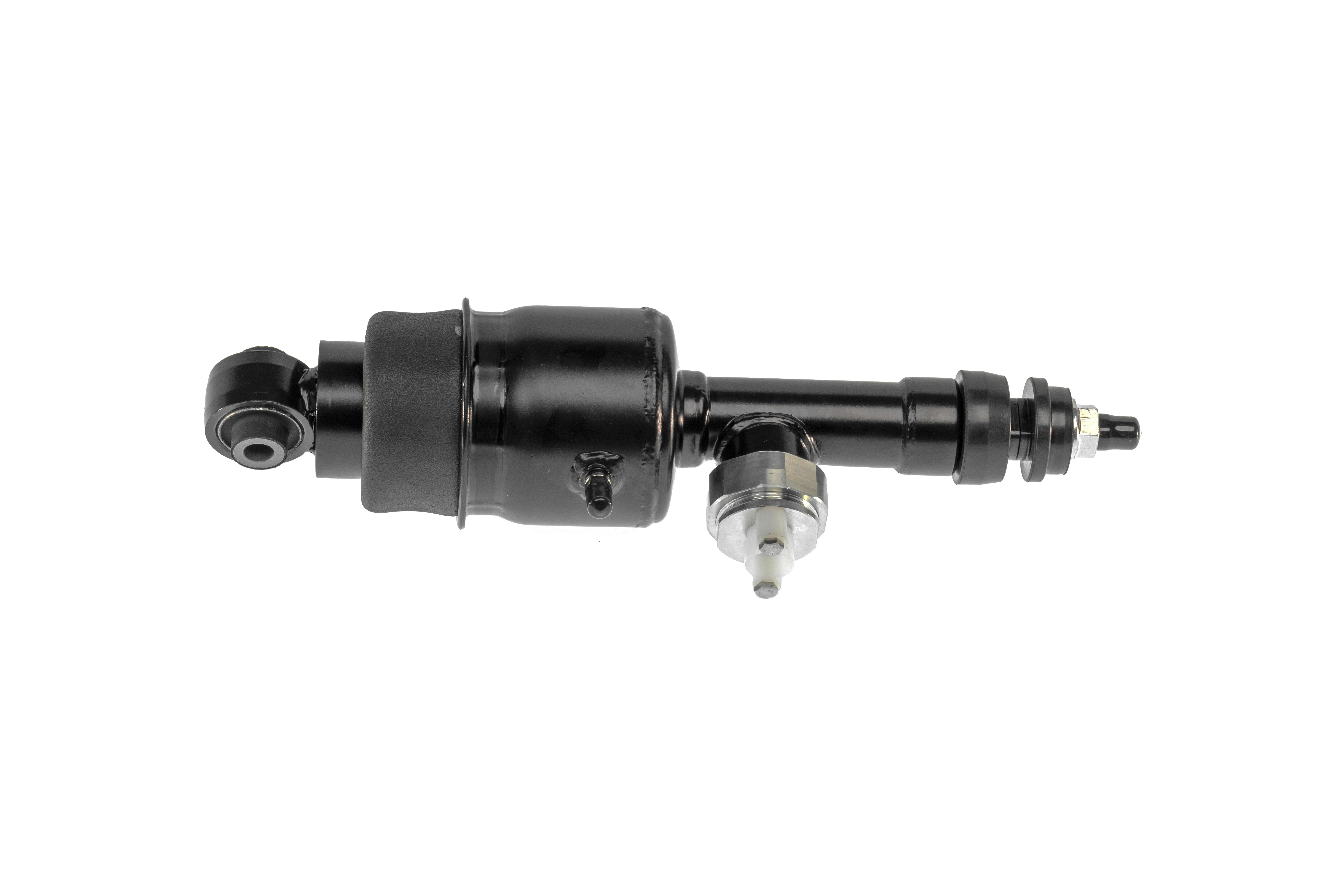
An air shock absorber features a traditional hydraulic shock enveloped by a sealed, pressurized air chamber. Adjusting air pressure alters the resting length of the shock, providing minor ride-height adjustments. Dynamic shaft seals play a critical role in maintaining internal pneumatic pressure during high-frequency stroke cycles. The internal valving still handles the dampening, but the added air sleeve provides a lifting force. When you pump air into the system, the sleeve expands, pushing the shock body and the shaft apart, which raises the vehicle's ride height slightly to compensate for sagging.
The structural integrity of this design relies heavily on the quality of the O-rings and the surface finish of the shock shaft. Any pitting or rust on the shaft will immediately tear the dynamic seal, causing a total loss of air pressure. Because these units handle both dampening fluid and compressed air, their internal architecture is highly sensitive to contamination.
These components suit occasional light-to-medium towing, such as pulling small aluminum boats, jet skis, or lightweight utility trailers. They also compensate for rear-end sag when carrying temporary cargo in the trunk or truck bed, like a weekend's worth of camping gear or a few bags of mulch. They are not designed for heavy, sustained hauling.
Air shocks offer a direct bolt-on replacement for factory shocks. They utilize the existing upper and lower shock mounts, meaning you do not need to drill into the frame or weld new brackets. You do not need complex onboard compressors, as they often fill via a manual Schrader valve routed to the rear bumper or license plate frame. This makes them highly accessible for DIY mechanics looking for a weekend project.
Factory shock mounts handle dampening forces, not heavy payloads. Relying on them for load bearing creates a massive risk of shock mount punch-through. When you inflate an air shock to lift a heavy load, you transfer the weight of that load from the vehicle's springs directly onto the shock mounts. Most factory upper shock mounts are thin stamped steel designed to handle the push-pull of hydraulic resistance, not the static weight of a trailer tongue. Overloading air shocks frequently results in sheared mounting bolts or torn sheet metal.
Air springs consist of heavy-duty rubber, polyurethane, or reinforced synthetic bladders. These bellows, sleeve, or rolling lobe designs sit external to the dampening system. They replace or supplement traditional steel coil or leaf springs. The air spring acts as a variable-rate spring, where the spring rate increases progressively as the bag compresses under load. Unlike an air shock, an air spring has no internal hydraulic fluid or valving. It is strictly a pneumatic load-bearing vessel.
Heavy-duty applications typically use convoluted bellows (double or triple bags), which offer massive load support and short stroke lengths. Rolling lobe air springs are used when longer suspension travel and a softer ride are required, as the rubber bladder rolls down over a composite or aluminum piston during compression.
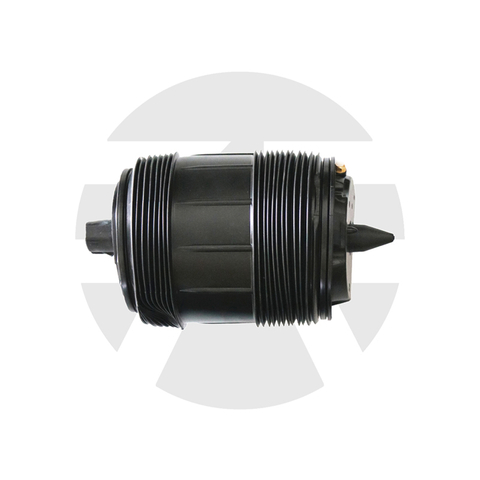
Air springs handle heavy-duty towing, including 5th wheel campers, gooseneck horse trailers, and heavy equipment haulers. Commercial hauling and fleet vehicles use them for constant load leveling to maintain safe steering geometry and headlight aim. Custom automotive applications also rely on them for extreme ride-height adjustability, allowing vehicles to drop the chassis to the ground for car shows and raise it for highway driving.
They offer massive load-carrying capacity, often rated for up to 5,000 pounds of leveling capacity per axle. Air springs transfer weight directly to the axle tube and the main frame rails, utilizing structural points specifically designed by automotive engineers for load bearing. You get highly customizable spring rates based on real-time PSI adjustments, allowing you to fine-tune the suspension for an empty bed or a maximum payload.
An air spring requires a separate, functioning shock absorber to control bounce. If you remove the shock absorbers, the air springs will act like basketballs, bouncing the vehicle uncontrollably after every bump. They are susceptible to road debris punctures, environmental dry rot, or chafing if improperly installed. These systems often require onboard air compressors, manifolds, DOT-approved air lines, and electronic management systems to get the most out of their capabilities, which increases installation time and complexity.
Shock mounts have significantly lower mathematical load limits compared to frame or axle spring perches. Air springs distribute heavy payloads safely across robust structural points. Air shocks localize stress on mounts not designed for heavy weight bearing. When evaluating suspension upgrades, you must look at the shear strength of the mounting hardware. A standard 1/2-inch shock bolt can shear under the extreme vertical loads imposed by an over-inflated air shock carrying a heavy trailer.
Air springs, on the other hand, use heavy steel brackets that bolt directly around the axle tube and clamp onto the thickest part of the chassis frame. This compressive load transfer mimics the factory suspension geometry, ensuring the chassis handles the weight exactly as the manufacturer intended.
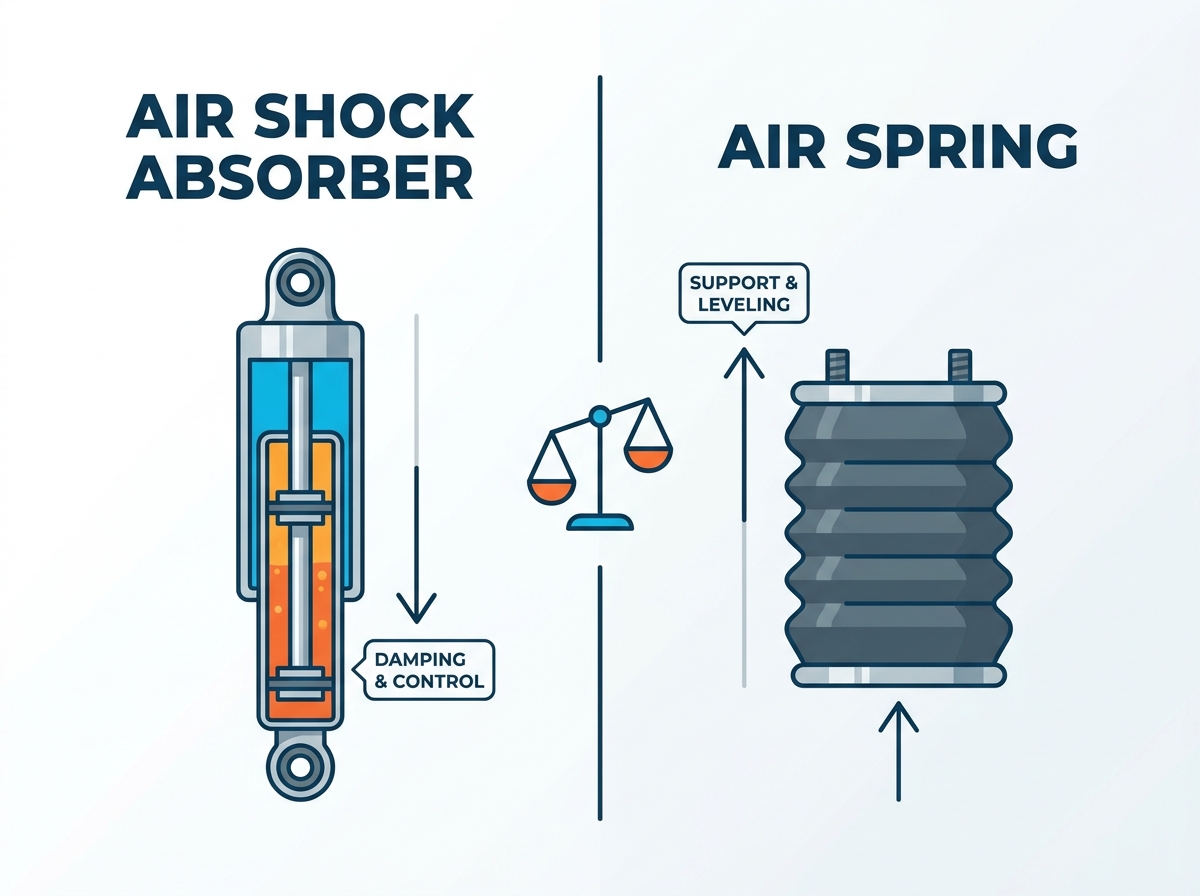
Noise, Vibration, and Harshness (NVH) outcomes vary significantly between the two setups. An over-inflated air shock absorber creates a harsh, rigid ride because the high air pressure restricts the hydraulic valving from moving freely. An air spring maintains a supple ride even under load when paired with a properly valved shock. Air springs offer superior chassis-isolation capabilities, minimizing road noise transfer compared to the solid mechanical path of an air shock.
Air shocks typically fail due to dynamic seal wear, fluid aeration, and shaft scoring under high-pressure loads. When the internal seal fails, the shock loses both its lifting capability and its dampening fluid, resulting in a completely blown suspension corner. Air springs face different failure modes, primarily external. They suffer from rubber degradation over years of UV exposure, punctures from sharp road debris, and abrasive wear if the bag rubs against a tire, frame rail, or hot exhaust pipe.
Air shocks provide a plug-and-play installation similar to standard shocks. You support the axle, remove the old shocks, bolt in the new air shocks, and route a single air line to a T-fitting and a Schrader valve. Air springs require assembling brackets, removing jounce bumpers, aligning the upper and lower mounts to prevent bag distortion, and routing dual air lines to ensure side-to-side stability. Maintenance for air shocks involves monitoring seals and checking for fluid leaks, while air springs require periodic visual inspections for rubber cracking and soapy water tests for fitting leaks.
Technical Specification | Air Shock Absorber | Air Spring (Air Bag) |
|---|---|---|
Primary Mechanical Function | Hydraulic dampening with light pneumatic load assist | Dedicated pneumatic load bearing and ride height control |
Maximum Load Capacity | Low to Medium (Limited by shock mount shear strength) | High to Extreme (Up to 5,000+ lbs leveling capacity) |
Installation Requirements | Simple bolt-on replacement of factory shocks | Complex bracket assembly, frame mounting, plumbing |
Mounting Point Stress | High localized stress on factory shock mounts | Low stress (distributes weight across frame/axle perches) |
Failure Modes | Internal seal blowout, fluid loss, shaft scoring | External dry rot, chafing, airline fitting leaks |
Check your tongue weight, gross vehicle weight rating (GVWR), and towing frequency before buying any parts. If you tow more than 20% of the vehicle's capacity regularly, default to air springs. They handle the sustained weight much better than shocks. Measure the rear suspension sag when your trailer is fully loaded. If the rear bumper drops more than two inches, an air shock will likely require too much pressure to level the load, putting your shock mounts at risk. Air springs will effortlessly lift the rear end back to factory ride height while maintaining suspension travel.
Determine your desired range of articulation and ride-height drop. If your goal involves extreme chassis clearance or a show-stance, full air spring suspension is required. Air shocks cannot provide the necessary range of motion to drop a vehicle to the pavement. Air springs, specifically rolling lobe designs paired with shortened shock absorbers, allow for massive vertical travel without sacrificing ride quality.
Air shocks typically fail at the internal O-ring or seal due to pressure and friction. Air springs usually fail due to dry rot, external punctures, or fitting leaks. Consider your driving environment when evaluating long-term reliability. If you drive on heavily salted winter roads, the exposed shock shafts on air shocks can pit and rust quickly, destroying the seals. In off-road environments, air springs need heavy-duty protective sleeves to prevent puncture from rocks and branches.

Inspect shock mounts carefully before installing air shocks. Look for hairline cracks in the sheet metal or elongated bolt holes. Reinforce brackets if you plan to carry loads near the upper limit of the shock's capacity. Welding a thicker steel plate over the factory upper mount can prevent structural failure under stress. Always torque the shock bolts to the manufacturer's exact specifications while the vehicle's weight is resting on the suspension, not while it is hanging on a lift, to prevent bushing bind.
Route air lines carefully to avoid moving parts like sway bars, driveshafts, and suspension links. Ensure air springs have adequate clearance from exhaust pipes and tires throughout the full suspension stroke. A minimum of one inch of clearance is required around the entire circumference of the air bag when fully inflated. Install heat shields on the exhaust pipe if it runs within three inches of the rubber bladder to prevent the bag from melting.
Use a systematic approach to isolate pressure drops. Do not just guess and replace parts. Fill the system to maximum operating pressure and apply soapy water to Schrader valves, Push-To-Connect (PTC) fittings, and the bladders themselves. Bubbles indicate a leak that requires immediate attention. Most leaks occur at the PTC fittings due to the air line not being cut perfectly square. Use a dedicated air line cutter, never a pair of side cutters or scissors, to ensure a clean, flush seal inside the fitting.
Inflate the suspension system to 90 PSI and let it sit for 10 minutes to stabilize.
Spray a thick mixture of dish soap and water directly onto the Schrader valve core.
Spray all PTC fittings at the bags, manifolds, and T-fittings.
Inspect the entire surface of the rubber bladder for micro-bubbles indicating dry rot porosity.
If a line is leaking at a fitting, depressurize the system, remove the line, cut off the last half-inch squarely, and reinsert it firmly.
Although air shock absorbers and air springs both use compressed air, they serve completely different purposes. Air shock absorbers are ideal for light load assistance and suspension damping, while air springs are designed for heavy load support and ride height control. Selecting the correct system based on your vehicle, payload, and driving conditions is essential for achieving safe, reliable, and long-lasting suspension performance.
Choosing a trusted suspension manufacturer is equally important. Tianyi specializes in the development and production of air shock absorbers, air springs, air compressors, and complete air suspension systems for global OEM and aftermarket customers. With advanced manufacturing technology, strict quality management, comprehensive in-house testing, and flexible OEM/ODM services, Tianyi delivers reliable air suspension solutions that meet international quality standards.
Evaluate your vehicle's payload, towing requirements, and suspension design before selecting a solution.
Choose air shock absorbers for light load leveling and air springs for heavy-duty hauling or commercial applications.
Ensure sufficient installation clearance and perform leak testing after installation.
Select products from experienced manufacturers with proven engineering capabilities and quality assurance systems.
Before choosing an air suspension supplier, evaluate their manufacturing experience, testing capabilities, product quality, and OEM/ODM support to ensure dependable long-term performance.
A: Replacing a spring entirely with a shock is structurally dangerous. Factory shock mounts are designed for dampening forces, not to support the vehicle's entire weight. Doing so risks catastrophic mount failure and immediate suspension collapse.
A: Air springs only replace steel coil or leaf springs. A separate shock absorber remains absolutely necessary to provide hydraulic dampening and control suspension bounce after hitting road imperfections.
A: Air springs use adjustable pneumatic pressure to manage loads and ride height actively. Solid rubber helper springs provide progressive, maintenance-free resistance without requiring compressed air, but they cannot be adjusted for varying loads.
A: Air shocks typically fail due to internal seal wear from friction and pressure over 30,000 to 50,000 miles. Air bags degrade externally from dry rot or chafing and can last over 80,000 miles if kept clean and properly inflated.
A: Air springs are definitively better for heavy towing. They mount directly to the frame and axle, offering vastly higher load capacities without stressing the weaker factory shock mounts.
A: Yes, you can manually inflate air springs using standard Schrader valves routed to the rear bumper. This provides a budget-friendly, highly reliable alternative to installing complex onboard air compressors and wiring.
A: Excessive bouncing indicates severe under-dampening. This often occurs when the air chamber is over-inflated to compensate for weak factory springs, which completely overwhelms the shock's internal hydraulic dampening capacity.


