
Views: 0 Author: Site Editor Publish Time: 2026-07-23 Origin: Site
Air suspension systems deliver unmatched ride quality and load-leveling capabilities. However, they are universally prone to inevitable failures as mileage accumulates. Vehicle owners dealing with a sagging suspension often face wildly varying repair quotes and confusion over whether to replace a single component or overhaul the entire system. Misdiagnosis frequently leads to recurring failures and wasted money. Standard shock or strut replacements represent a baseline maintenance expense. In contrast, air suspension repairs carry an exponentially higher financial burden due to complex pneumatics and electronics. This guide provides a realistic, data-backed breakdown of repair estimates across major vehicle brands. We evaluate OEM versus aftermarket parts and detail the hidden labor and diagnostic fees that impact the final bill. Understanding the true air shock absorber replacement cost helps you make informed, permanent repair decisions.
Baseline Cost Expectation: Replacing a single air shock absorber typically ranges from $800 to $2,500+, heavily dependent on whether OEM or aftermarket parts are used and the specific vehicle brand.
The Front vs. Rear Premium: Front air struts typically cost 20–40% more than rear air shocks due to integrated steering dynamics, active damping electronics, and complex packaging.
The Domino Effect: Replacing an air strut without testing the air compressor and valve block often leads to secondary failures and doubled labor costs.
OEM vs. Aftermarket Viability: High-quality aftermarket alternatives (e.g., Arnott, Bilstein) can reduce parts costs by 40-60% without sacrificing reliability, provided they are installed by a qualified specialist.
Conversion as an Alternative: For older vehicles where repair costs exceed vehicle value, converting from air to traditional coil springs is a viable, permanent cost-mitigation strategy.
Table of Contents
A successful repair restores factory ride height and ensures a completely leak-free system. It prevents the compressor from overworking and burning out. Temporary patches, like sealants or splicing airlines, fail rapidly under vehicle weight. True success requires addressing the root cause of the pressure loss. Replacing a single leaking bladder without checking the main valve block leaves the system vulnerable to immediate secondary failures. Long-lasting repairs demand comprehensive diagnostics, proper parts sourcing, and exact software calibration.
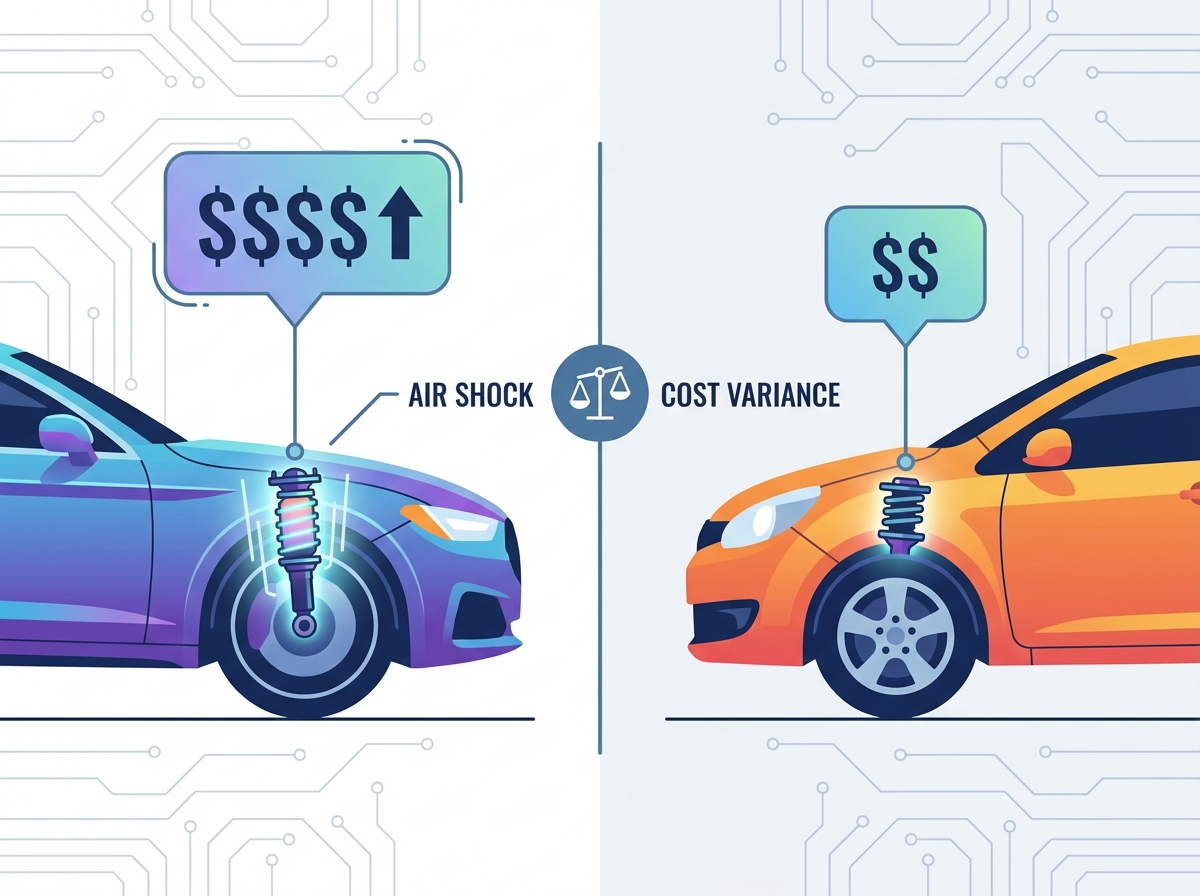
Standard shock and strut replacements sit at a predictable baseline for mainstream commuter cars. They use basic steel coil springs and hydraulic dampers. An air shock absorber carries a massive premium over these traditional setups. You are paying for complex rubber air bladders, electronic solenoids, and integrated adaptive damping technology. These components require specialized manufacturing processes. The resulting parts are significantly more expensive than traditional steel springs and hydraulic tubes. The labor required to install them also increases due to the pneumatic connections.
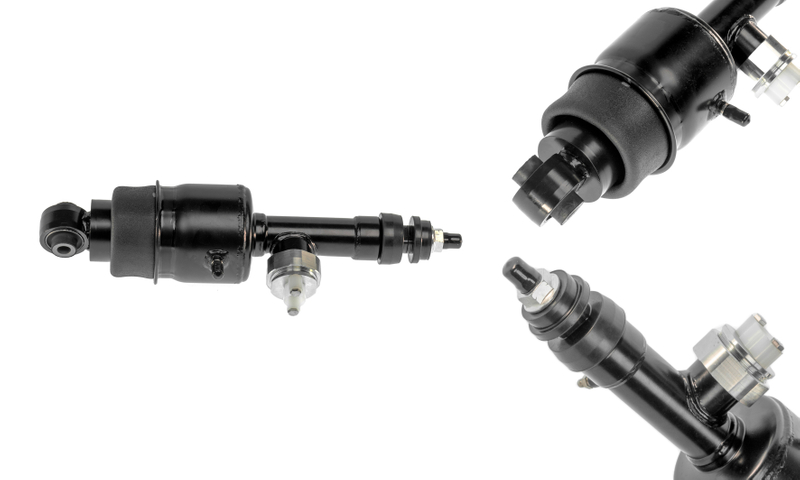
Genuine OEM parts sourced directly from the dealership carry a massive premium. You pay for the brand logo and guaranteed factory fitment. Original Equipment Supplier (OES) parts offer a smart middle-ground. They come from the exact same assembly line but lack the car brand logo. Premium aftermarket rebuilds and new assemblies provide another tier. High-quality aftermarket units offer an excellent reliability ratio. Avoid ultra-cheap unbranded parts entirely. Their failure rates are notoriously high, often leaking straight out of the box.
Part Category | Source | Reliability | Best Use Case |
|---|---|---|---|
Genuine OEM | Dealership | Highest | Vehicles under warranty or high-end luxury retention |
OES (Original Equipment Supplier) | Independent Distributors | Highest | Out-of-warranty luxury vehicles seeking factory performance |
Premium Aftermarket (e.g., Arnott) | Specialty Retailers | High | Daily drivers needing reliable, cost-effective repairs |
Unbranded Aftermarket | Online Marketplaces | Low | Not recommended due to high premature failure rates |
Front air struts cost noticeably more in both parts and labor than rear units. The front suspension handles complex alignment geometry and integrated steering interfaces. Weight distribution demands during heavy braking put immense stress on front struts. Rear air shocks or standalone air springs are generally simpler in design. They are easier to access, requiring less teardown of surrounding suspension components. This mechanical reality dictates a significant price discrepancy between the front and rear axles.
Dealership labor rates are notoriously high. Independent European or luxury specialists often charge slightly less while providing equal or better hands-on expertise. Standard suspension labor is straightforward. Air suspension labor is vastly more intensive. Technicians spend hours per assembly. They must handle fragile pneumatic plumbing, perform rigorous leak testing with specialized smoke machines, and manage electronics integration. The process requires extreme cleanliness to prevent debris from entering the air lines.
A leaking air shock forces the compressor to run continuously to maintain ride height. This constant operation quickly overheats and burns out the compressor motor. Replacing a burned-out compressor adds substantial expense to the repair bill. You must also replace the compressor relay during this service. A stuck relay will destroy a brand-new compressor instantly. Inspecting all air lines and the main valve block is mandatory. Skipping these checks guarantees future system failures and repeated labor charges.
Mercedes-Benz utilizes both Airmatic and hydraulic Active Body Control (ABC) systems. Common models like the S-Class, GL/GLS, and E-Class frequently require strut replacements as the rubber bladders dry rot. Standard Airmatic struts are expensive but manageable through aftermarket suppliers. The hydraulic ABC system is entirely different. ABC components operate under extreme hydraulic pressure rather than air. Replacing ABC struts, accumulators, and tandem pumps requires specialized fluid handling and carries a much higher premium than standard pneumatic Airmatic repairs.
Range Rover Sport and full-size models rely heavily on their Electronic Air Suspension (EAS) for off-road capability. Front strut failures are incredibly common due to heavy engine weight and extreme off-road articulation. Rear airbags tend to last slightly longer but still suffer from dry rot. Land Rover repairs require proprietary diagnostic software to recalibrate the ride height and clear hard fault codes. This software requirement forces many owners to rely on dealerships or high-end specialists.
The Audi Q7, A8, Porsche Cayenne, and Panamera share complex Adaptive Air Suspension systems. Because Volkswagen, Audi, and Porsche share platform architectures, many components overlap. Sourcing the equivalent Volkswagen Touareg part for a Porsche Cayenne can sometimes lower parts costs. However, the labor remains intensive. Calibration requires specific scan tools like VCDS or PIWIS to set the baseline adaptation values correctly. Failing to adapt the new struts results in a harsh ride and suspension fault lights.
The Ram 1500 and Jeep Grand Cherokee represent the mainstream luxury utility segment. Their Active-Level and Quadra-Lift systems use a closed-loop nitrogen architecture. This is a critical distinction from open-air systems. You cannot simply fill these systems with shop air. They require pure nitrogen to prevent moisture buildup and internal freezing during winter. Recharging the closed-loop system adds extra labor time and requires specialized gas handling equipment and specific scan tool routines.
Lexus GX, LX, and LS models feature highly durable Adaptive Variable Suspension systems. Japanese OEM air shocks generally outlast their European counterparts by a wide margin. It is common for Lexus systems to operate flawlessly for years before the rubber degrades. While the replacement parts remain expensive, the extended longevity significantly lowers the lifetime maintenance burden. When they do fail, replacing the rear height control bags on a GX or LX is a relatively straightforward process compared to European sedans.
Proper diagnosis prevents wasting money on unnecessary parts. Mechanics follow a strict diagnostic tree to isolate the fault.
Start with a simple soapy water test on the exposed air bags and valve block fittings. Look for bubbling that indicates a tear in the rubber bladder or a loose brass fitting.
Listen closely near the wheel wells for hissing sounds immediately after turning off the engine.
Check the ride height sensors attached to the control arms. A broken plastic ride height sensor linkage will completely mimic a blown strut.
Monitor the compressor run time. If it runs for more than 60 seconds upon startup, there is a massive leak in the system.
Perform an overnight drop test. Measure the distance from the center of the wheel to the fender lip in the evening, then compare it in the morning.
Modern air suspensions are heavily computerized and networked to the vehicle's CAN bus. Technicians must use OBD2 bidirectional scan tools to depressurize the system safely before unbolting any lines. Cracking a pressurized line can cause severe injury. Once the new parts are installed, the suspension module requires recalibration. The computer needs to learn the new ride height values for each corner. Skipping this software calibration leads to uneven tire wear, persistent dashboard warning lights, and highly erratic handling dynamics at highway speeds.
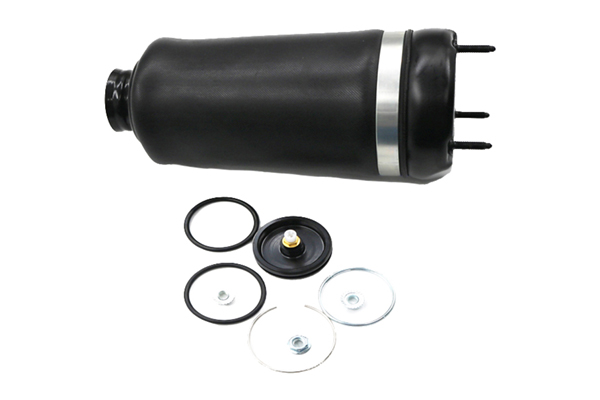
Replacing four aging air struts and a burned-out compressor is a massive financial undertaking for an older vehicle. A complete coil spring conversion kit offers a permanent alternative. Conversion kits replace the pneumatic components with traditional steel springs and conventional shock absorbers. The trade-off is a noticeable reduction in ride quality and adaptability. You lose the ability to auto-level the vehicle when towing heavy loads or carrying maximum payload. However, you gain absolute reliability and eliminate future pneumatic failures.
Converting to coil springs impacts resale value differently depending on the vehicle type and buyer demographic. For a flagship luxury sedan like an S-Class or A8, a coil conversion often hurts resale value. Luxury buyers expect the factory air ride experience. For older off-road or utility vehicles like a Land Rover LR3 or Lexus GX, a conversion can actually increase desirability. Buyers appreciate the eliminated maintenance risk for trail rigs. You must install electronic bypass modules during the conversion to eliminate suspension warning lights on the dashboard.
Selecting the right aftermarket parts is critical to avoiding repeat labor charges. Look for manufacturers that offer limited lifetime warranties. Inspect the build quality; favor units with CNC-machined aluminum components and multi-ply rubber bladders from reputable rubber suppliers like Continental. Reputable brands like Arnott or Bilstein have proven track records in the field. Avoid unbranded internet specials. The labor cost to replace a prematurely failed cheap strut will wipe out any initial parts savings.
Always replace air shocks in pairs across the same axle. If the front-left strut fails, the front-right strut is at the exact same point in its lifecycle. The rubber has endured the same heat cycles and road impacts. Replacing only one side creates imbalanced damping. The older shock will struggle to keep up with the new unit, causing it to fail shortly after. Axle-pair replacement is the established industry standard for safe vehicle handling and predictable braking.
Do not take a complex air suspension issue to a general lube shop or tire center. Verify that the independent repair facility possesses the specific diagnostic software for your vehicle brand. Ask them directly if they can perform ride height recalibrations and nitrogen recharges if applicable. If they cannot communicate with the suspension control module, they cannot complete the repair properly. Authorize work only at shops equipped for advanced pneumatic diagnostics and European or luxury specific repairs.
Understanding the true air shock absorber replacement cost allows you to make smarter repair decisions and avoid unnecessary expenses. By comparing OEM and aftermarket parts, diagnosing the root cause correctly, and choosing the appropriate repair strategy, you can improve suspension reliability while controlling long-term maintenance costs.
Choosing a reliable parts supplier is equally important for long-term performance. Tianyi specializes in manufacturing high-quality air suspension components, including air shock absorbers, air springs, compressors, and complete suspension systems for passenger vehicles and commercial applications. With advanced production capabilities, strict quality management, and OEM/ODM services, Tianyi provides dependable air suspension solutions for customers around the world.
Compare OEM, OES, and premium aftermarket options before deciding on a replacement.
Diagnose the complete air suspension system to prevent repeat failures and unnecessary repair costs.
Replace air shock absorbers in axle pairs whenever possible to maintain balanced suspension performance.
Choose experienced repair shops with the proper diagnostic tools and air suspension calibration capabilities.
Before selecting an air suspension parts supplier, evaluate their manufacturing expertise, product quality, warranty support, and supply chain reliability to ensure long-term value and dependable vehicle performance.
A: Most factory air shock absorbers last between 60,000 and 100,000 miles. Longevity heavily depends on climate and road conditions. Cold weather makes the rubber bladders brittle, while rough roads accelerate physical wear and tear on the internal dampers.
A: It is highly discouraged. Replacing a single unit creates uneven damping and handling imbalances. The older shock on the opposite side will usually fail shortly after due to age and overcompensation. Industry standard dictates replacing them in pairs per axle.
A: No. Driving with a leaking shock causes the vehicle to bottom out over bumps. This compromises braking distances and handling. Furthermore, it guarantees your air compressor will burn out from continuous operation, compounding your repair bill.
A: Air shocks are vastly more complex. They feature flexible rubber air bladders, electronic damping valves, and specialized pneumatic fittings. The manufacturing costs are higher, and the installation requires complex leak testing and software calibration.
A: Standard car insurance does not cover mechanical wear and tear. Extended warranties often cover the compressor and valve blocks, but many explicitly exclude the rubber air springs, classifying them as consumable wear items. Read your specific contract carefully.
A: DIY replacement is possible for experienced mechanics but carries risks. The system operates under extreme pressure and must be safely depressurized. Additionally, you need an advanced bidirectional scan tool to recalibrate the suspension module after installation.


