
Views: 0 Author: Site Editor Publish Time: 2026-07-23 Origin: Site
The global shift toward premium vehicle ride quality and commercial load management drives massive demand for air suspension systems. Sourcing these components at scale introduces significant risk. Importing sub-standard units leads to catastrophic failure rates, costly warranty claims, and permanent damage to distributor reputation. When an air shock absorber fails prematurely, the impact extends far beyond the initial unit cost, affecting labor reimbursements and customer trust.
This comprehensive air shock absorber buying guide provides a rigorous, technical framework for procurement teams to evaluate manufacturer specifications, verify quality control protocols, and confidently shortlist suppliers capable of delivering consistent, OEM-grade components.
Validating IATF 16949 certification and in-house factory testing protocols (e.g., million-cycle fatigue tests) is non-negotiable for mitigating batch defect risks.
The longevity of an air shock absorber hinges on the chemical composition of the rubber air sleeve and the micro-finish of the piston rod.
Procurement decisions must weigh the upfront unit cost against the Total Cost of Quality (TCQ), factoring in projected warranty claim rates and reverse logistics.
Importers must align their sourcing strategy with their target market, distinguishing between heavy-duty commercial applications and luxury passenger vehicle replacements.
Table of Contents
Evaluating baseline performance metrics is the first step in supplier validation. Procurement teams must demand detailed dynamometer test results demonstrating damping force consistency across varying temperature extremes. High-quality units maintain stable rebound and compression characteristics from -40°C to 120°C. This ensures reliable performance in diverse global climates. You need to see the actual dyno graphs, not just a summary sheet.
Verification of pneumatic integrity is equally important. Establish acceptable leakage rates and pressure retention benchmarks over 48-hour static testing. A premium component exhibits zero measurable pressure drop during this period. Any deviation indicates potential flaws in the crimping process or seal installation. These flaws inevitably lead to premature failure in the field. We recommend implementing a strict testing protocol for all incoming sample batches.
Mount the sample unit on a calibrated suspension dynamometer.
Run a standard 100-cycle warm-up phase to bring hydraulic fluid to operating temperature.
Record compression and rebound forces at velocities ranging from 0.1 m/s to 1.0 m/s.
Submerge the pressurized air sleeve assembly in a water tank to check for micro-leaks around the crimp rings.
Perform a 48-hour static pressure hold test at maximum rated PSI.
Dimensional accuracy dictates installation success and suspension geometry. Define strict tolerance limits, typically +/- 0.5mm, for critical physical measurements. These include the extended length, collapsed length, stroke length, and eyelet or bushing diameters. Imprecise dimensions cause installation difficulties, abnormal wear on related suspension components, and compromised vehicle handling.
Establish protocols for verifying OEM cross-reference databases to eliminate cataloging errors before tooling and bulk production. Require suppliers to provide Coordinate Measuring Machine (CMM) data comparing their aftermarket design against the original OEM component. This proactive verification prevents the costly importation of unsellable inventory due to fitment incompatibilities. Always request physical samples to test-fit on a localized donor vehicle chassis.
Defining acceptable Defect Parts Per Million (DPPM) rates for incoming shipments sets clear expectations for supplier quality control. A stringent DPPM target forces the manufacturer to implement robust end-of-line testing rather than relying on batch sampling. Importers should establish these thresholds in the initial purchasing agreement to provide leverage in the event of quality disputes.
Outline standard warranty expectations from tier-1 and tier-2 overseas manufacturers. A reputable supplier offers a warranty period of 12 to 24 months, reflecting confidence in their manufacturing process and material selection. Ensure the warranty terms explicitly cover manufacturing defects, seal failures, and premature air sleeve blowouts under normal operating conditions. You must clearly define the claims process, including whether the supplier requires physical return of defective units or just photographic evidence and batch codes.

The structural requirements of luxury SUV air struts differ vastly from heavy-duty commercial vehicle shock absorbers. Passenger vehicle applications prioritize ride comfort, noise reduction, and rapid response to road irregularities. These units often feature complex internal valving and softer rubber compounds designed for optimal vibration isolation. The focus is on seamless integration with the vehicle's electronic control unit.
Commercial applications demand extreme durability and high load-bearing capacities. Commercial units require thicker cylinder walls, reinforced mounting brackets, and heavy-duty multi-ply air sleeves. They must withstand sustained heavy loads and harsh operating environments without structural deformation. The rubber compounds used here prioritize abrasion resistance and high burst pressure over maximum flexibility.
Differentiate between monotube and twin-tube internal damping structures within the core. Monotube designs feature a single cylinder housing both the hydraulic fluid and a high-pressure gas charge, separated by a floating piston. Twin-tube designs utilize an inner working cylinder and an outer fluid reservoir. Each design serves a specific market segment.
Monotube designs offer superior heat dissipation and responsiveness. They are ideal for performance or heavy-duty applications where fluid fade is a concern. Twin-tube designs provide cost-efficiency and a softer ride profile. They align well with the demands of passenger commuter markets where extreme performance is less of a priority. Understanding this distinction helps you match the right product to your specific customer base.
Passive units rely entirely on fixed internal valving and air pressure for damping control. Active units integrate with the vehicle's Adaptive Damping System (ADS), utilizing electronic solenoids to continuously adjust damping rates based on sensor inputs. The market is rapidly shifting toward active systems, but they carry higher technical risks.
Address the increased intellectual property and reverse-engineering risks associated with importing electronic suspension components. Active shocks require precise calibration to ensure compatibility with OEM control modules. Sourcing these units demands rigorous vetting of the supplier's electronic manufacturing capabilities. They must demonstrate the ability to bypass or replicate OEM software protocols without triggering dashboard error codes. Always test active units on a vehicle equipped with an advanced diagnostic scanner.
Compare the procurement economics of importing individual replacement shock absorbers versus fully assembled air struts. Bare shocks require the installer to reuse existing top mounts, air springs, and electronic wiring harnesses. Complete assemblies include all necessary components pre-assembled and pressure-tested at the factory. The trend in the aftermarket heavily favors complete assemblies.
Evaluate the assembly-level QC risks and the higher profit margins associated with ready-to-install assemblies. Complete struts carry a higher initial unit cost and occupy more shipping volume. However, they significantly reduce installation time and the risk of installer error. This convenience translates to higher demand and stronger profit margins. Mechanics prefer complete assemblies because they turn bays over faster and reduce comebacks.
Evaluate the use of chloroprene rubber (CR) versus natural rubber blends for ozone, oil, and flex-cracking resistance. Chloroprene rubber offers superior longevity in harsh environments. It resists degradation from road salts, automotive fluids, and extreme temperature fluctuations. Inferior rubber blends harden, crack, and eventually rupture under dynamic stress. You must request the material data sheet (MDS) for the rubber compound.
Identify the importance of multi-ply cross-cord construction in preventing blowout under peak dynamic loads. The internal reinforcing cords dictate the burst strength of the air sleeve. Specify the required denier and weave pattern of the aramid or nylon cords. This ensures the sleeve handles sudden pressure spikes during aggressive suspension articulation. The cord angle during the vulcanization process is a closely guarded manufacturing secret that directly impacts the sleeve's expansion characteristics.
Specify the required hard-chrome plating thickness and surface roughness (Ra value) to prevent premature seal wear. A high-quality piston rod features a micro-finish that minimizes friction while retaining sufficient lubricating oil. Excessive roughness rapidly degrades the internal seals, leading to fluid loss and complete damper failure. We look for an Ra value of 0.1 to 0.2 micrometers.
Assess the quality of the multi-lip NOK (or equivalent) oil seals used to maintain hydraulic and pneumatic separation. The seal package is the most critical component determining the lifespan of the unit. Demand specifications on the seal material, typically Viton or high-grade NBR. It must withstand internal operating pressures and temperature extremes without hardening or bypassing fluid. A failed seal turns an air shock into a useless metal tube.
Evaluate cylinder outer wall thickness, typically ranging from 1.5mm to 2.5mm, to withstand high operating pressures without deformation. Thin-walled cylinders are prone to bulging or bursting, especially in heavy-duty applications. The material grade of the steel tube must also be verified to ensure adequate tensile strength. Seamless steel tubing is preferred over welded tubing for the main pressure vessel.
Analyze welding technologies utilized at critical stress points. Prioritize robotic friction welding over manual MIG/TIG welding for mounting brackets and eyelets. Robotic welding ensures consistent penetration and eliminates the variability associated with manual processes. This reduces the risk of structural failure at the mounting points under heavy dynamic loads. Inspect the weld beads on sample units for porosity, undercut, and inconsistent width.
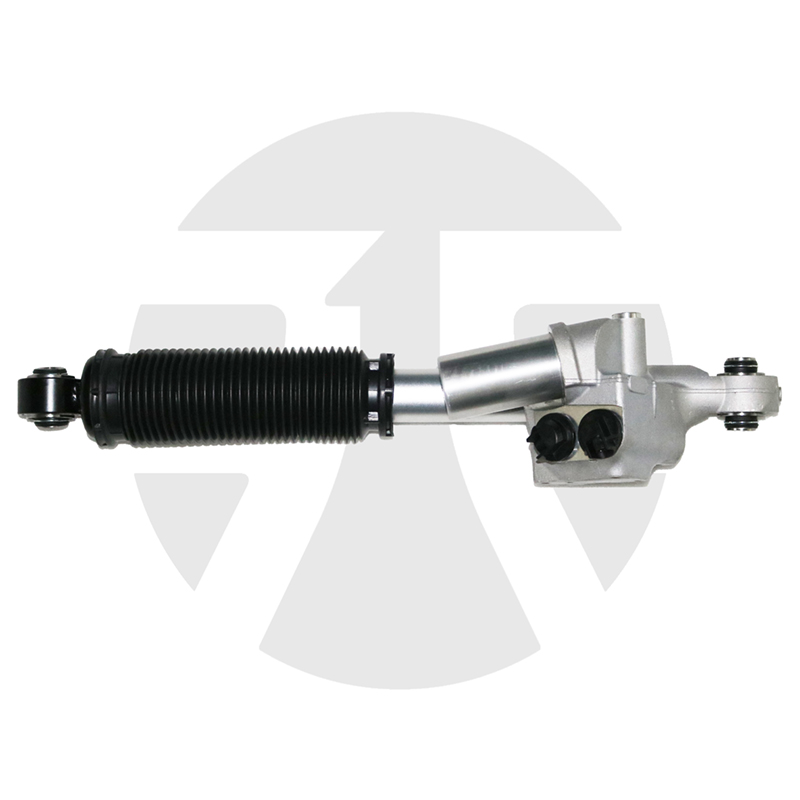
Examine the precision of the deflective disc valving system for rebound and compression control. The thickness and arrangement of the shims dictate the damping curve. Suppliers must demonstrate the ability to precisely replicate the OEM damping profile. This ensures the vehicle maintains its intended handling characteristics and ride comfort. Ask the supplier for their shim stack configuration data.
Verify the use of high-viscosity index (VI) synthetic shock oil to prevent foaming and fade under sustained high-frequency oscillation. Low-quality hydraulic fluid thins out rapidly as temperatures rise, drastically reducing damping effectiveness. Synthetic oils maintain consistent viscosity across a broader temperature range. This ensures stable performance during demanding driving conditions. The oil must also contain anti-foaming agents to prevent cavitation within the damper.
Air Shock Absorber Component Specifications | ||
Component | Critical Specification | Quality Indicator |
|---|---|---|
Air Sleeve | Material Composition | Chloroprene Rubber (CR) with Multi-ply Cross-cord |
Piston Rod | Surface Finish | Hard-chrome Plating, Ra 0.1-0.2 |
Oil Seal | Design & Material | Multi-lip NOK (or equivalent), Viton/NBR |
Cylinder Tube | Wall Thickness | 1.5mm - 2.5mm Seamless High-Tensile Steel |
Hydraulic Fluid | Viscosity Index | High-VI Synthetic Shock Oil with Anti-Foam |
ISO 9001 is insufficient for automotive components. IATF 16949 is the baseline for serious importers. IATF 16949 is specifically tailored for automotive supply chains, demanding rigorous defect prevention, variation reduction, and continuous improvement processes. It ensures the manufacturer utilizes advanced product quality planning (APQP) and production part approval processes (PPAP). If a factory cannot produce a valid IATF 16949 certificate, walk away.
Environmental certifications, such as ISO 14001, indicate long-term supplier stability. Compliance with environmental regulations minimizes the risk of sudden factory closures due to government crackdowns on industrial pollution. A supplier committed to sustainable manufacturing practices demonstrates a higher level of operational maturity and reliability. It shows they invest in their infrastructure and plan to be in business for the long haul.
Suppliers must possess in-house testing equipment to validate design and production quality. They need dynamometers for verifying damping force, salt spray chambers for evaluating corrosion resistance (minimum 500 hours), and burst pressure testers for the air sleeves. Relying on outsourced testing introduces delays and reduces oversight. You want a factory that controls its own quality validation loop.
Audit a supplier's end-of-line (EOL) testing procedures to ensure 100% of units are checked before packaging. Every completed unit must undergo automated pressure decay testing and basic functional checks. Visual inspections alone are inadequate for detecting internal seal flaws or micro-leaks in the pneumatic chambers. The EOL test rig should automatically reject and quarantine any unit that fails the pressure hold parameters.
Analyze the trade-off between selecting the lowest-bidding supplier and the hidden costs of elevated return rates. A lower initial unit price often correlates with inferior materials and relaxed quality control. When defect rates climb, the cost of processing returns, issuing refunds, and managing dissatisfied customers quickly erodes any upfront savings. You are not just buying a part; you are buying the reliability of that part.
Model the financial impact of a 3% defect rate on overall container profitability. Factor in the cost of the defective unit, the outbound and return shipping expenses, and the administrative overhead required to process the warranty claim. This analysis clearly demonstrates that investing in higher-quality components yields better long-term financial performance. A slightly higher unit cost from a reputable factory acts as an insurance policy against catastrophic batch failures.
Evaluate the impact of packaging dimensions on shipping container utilization. Air suspension components are bulky, and inefficient packaging severely limits the number of units per container, driving up the landed cost per item. Work with suppliers to optimize box dimensions and utilize efficient dunnage without compromising product protection. You want to maximize the cube utilization of a 40HQ container.
Robust, moisture-resistant export packaging prevents corrosion during prolonged ocean transit. Components should be sealed in VCI (Volatile Corrosion Inhibitor) bags and packed in heavy-duty corrugated boxes. Salt-laden ocean air rapidly degrades exposed metal surfaces if adequate protective measures are not implemented. Specify the exact cardboard ply thickness and palletization methods in your purchase order.
Start with a paid sample run, followed by a pilot order of 100-200 units before committing to full container loads (FCL). This phased approach allows procurement teams to validate fitment, performance, and packaging quality in a real-world setting without exposing the business to massive financial risk. Install the pilot units on local fleet vehicles and monitor them for 30 days.
Utilize third-party pre-shipment inspection (PSI) services to verify dimensional tolerances and material specs before the container is sealed. Independent inspectors provide an objective assessment of the production batch. They ensure the supplier adheres to the agreed-upon specifications and quality standards prior to dispatch. Give the inspector a detailed checklist based on your approved sample.
Dual-source critical SKUs to protect against factory delays or geopolitical trade disruptions. Relying on a single manufacturer for high-volume items creates a critical vulnerability. Establishing relationships with secondary suppliers ensures continuity of supply during unforeseen production bottlenecks or shipping delays. Keep your secondary supplier active with smaller, regular orders.
Negotiate clear Incoterms and penalty clauses for delayed production schedules. Clearly defined terms of sale dictate the transfer of risk and responsibility. Implementing financial penalties for late deliveries incentivizes the supplier to prioritize your orders and maintain accurate production timelines. Make sure these clauses are legally enforceable in the supplier's jurisdiction.
Successful air shock absorber procurement depends on selecting manufacturers that consistently deliver reliable product quality, stable production capacity, and strict quality management. By evaluating technical specifications, factory certifications, testing capabilities, and long-term supplier performance, importers can minimize sourcing risks while maximizing product reliability and business profitability.
Choosing an experienced manufacturing partner is equally important for long-term success. Tianyi is a professional manufacturer of air shock absorbers, air springs, air compressors, and complete air suspension systems for global OEM and aftermarket customers. With advanced manufacturing facilities, comprehensive in-house testing, strict quality control, and flexible OEM/ODM capabilities, Tianyi delivers dependable air suspension solutions that meet demanding international quality standards.
Request complete technical specifications and material information before placing bulk orders.
Verify IATF 16949 certification and evaluate the supplier's in-house testing capabilities.
Start with pilot orders and third-party inspections before scaling to full container shipments.
Build long-term partnerships with manufacturers that provide stable quality, technical support, and reliable delivery.
Before selecting an air shock absorber manufacturer, evaluate their engineering capabilities, production capacity, quality assurance system, and OEM/ODM experience to ensure long-term supply chain stability and customer satisfaction.
A: High-quality aftermarket units should mirror OEM lifespans, typically lasting 80,000 to 100,000 miles, depending on the rubber compound quality and operating environment.
A: Request the material data sheet (MDS) and look for high-grade chloroprene rubber. You can also mandate third-party lab testing for ozone resistance and tensile strength before approving bulk production.
A: An air strut integrates the shock absorber and the air spring into a single structural component that supports the vehicle's weight and dictates suspension geometry, whereas an air shock absorber primarily dampens motion and may operate independently of the main load-bearing spring.
A: IATF 16949 is a stringent quality management standard specific to the automotive industry. It ensures the manufacturer has documented, repeatable processes for defect prevention, continuous improvement, and supply chain consistency.
A: The most frequent failures are air sleeve blowouts due to thin or inferior rubber, and premature air leaks caused by poor micro-finishing on the piston rod tearing the internal seals.
A: Passive shocks carry lower technical risk and fewer warranty claims. Active electronic shocks offer higher profit margins but require rigorous vetting of the supplier's electronic solenoid reliability and OEM software compatibility.
A: Importers should require suppliers to match OEM drawings and provide detailed digital coordinate measurements (CMM data). Additionally, obtaining a physical pre-production sample to test on a localized donor vehicle chassis is highly recommended.


